
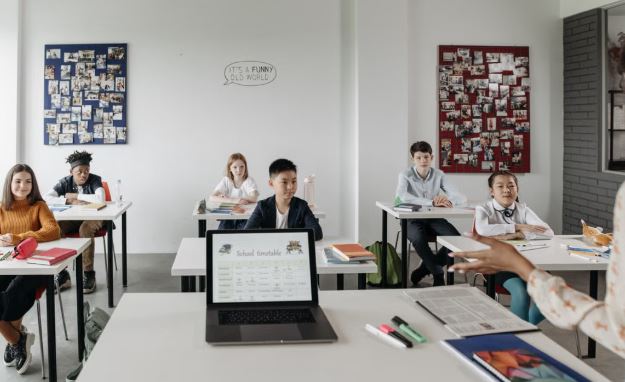
Education is gradually moving beyond the traditional approach of teaching every student through the same lessons, pace and assessment methods. With artificial intelligence becoming increasingly integrated into digital learning platforms, schools, colleges and education companies are exploring ways to make learning more personalised, interactive and responsive to individual needs. From identifying learning gaps to providing instant feedback and customised study materials, AI is changing how students understand subjects, practise skills and engage with education.
The shift is particularly important in a learning environment where students have different abilities, interests and learning speeds. While some students understand concepts quickly, others need additional explanations and practice before progressing. Traditional classroom models often struggle to address these differences individually. AI-powered learning platforms are attempting to bridge this gap by adapting educational content to each learner’s progress.
For the education industry, this development is creating opportunities to improve teaching methods, develop new digital products and build more flexible learning services. It is also changing what students and parents expect from modern education.
How AI Is Making Learning More Personalised
One of the biggest contributions of artificial intelligence is its ability to analyse student performance and adjust learning materials accordingly. AI-powered platforms can examine quiz results, learning patterns, response times and areas of difficulty to identify where a student needs additional support.
For example, if a student repeatedly struggles with mathematics, the platform can recommend additional exercises, simpler explanations and practice questions before introducing more advanced concepts. Students who perform well may receive more challenging material, allowing them to progress without being restricted by a fixed classroom pace.
This approach can make learning more flexible and help students build confidence in subjects they previously found difficult. It also allows teachers to understand individual learning requirements more clearly and provide additional support where necessary.
AI Tutors Are Changing the Learning Experience
Another important development is the emergence of AI-powered tutoring systems. These tools allow students to ask questions, receive explanations and practise subjects outside regular classroom hours.
Unlike conventional digital learning resources that mainly provide recorded lessons or fixed answers, conversational AI tools can guide students through a problem step by step. They can offer hints, explain mistakes and encourage learners to understand the reasoning behind an answer.
For students who cannot always access private tutors or additional coaching, these tools may offer a more affordable source of supplementary academic support.
However, AI tutors should complement teachers rather than replace them. Human educators remain important for understanding student behaviour, developing critical thinking, encouraging curiosity and providing emotional support.
Better Feedback Can Improve Student Performance
In conventional education, students sometimes wait several days to receive feedback on assignments and assessments. This delay can make it difficult to correct misunderstandings while a topic is still fresh.
AI-powered assessment tools are changing this process by providing immediate feedback on quizzes, practice exercises and certain types of written assignments. Students can identify errors, understand where they went wrong and attempt similar questions without waiting for the next classroom session.
Teachers can also use performance data to identify recurring difficulties across a class. If several students struggle with the same topic, educators can revisit the lesson or introduce a different teaching approach.
This can make assessments more useful as part of the learning process rather than treating them only as a way to measure final performance.
Predictive Learning Helps Teachers Identify Students Who Need Support
Artificial intelligence is also creating opportunities for early academic intervention. By analysing attendance, assignment completion, assessment performance and participation patterns, educational platforms can identify signs that a student may be falling behind.
For example, a consistent decline in quiz scores or reduced participation may indicate that a student needs additional academic assistance. Teachers can use these insights to arrange extra lessons, recommend practice materials or communicate with parents.
Such systems can help institutions move from responding to poor examination results towards identifying learning difficulties earlier.
However, predictions should never be treated as final judgements about a student’s ability. Personal circumstances, access to technology and temporary difficulties can influence performance. Human teachers must remain involved in interpreting the information.
Interactive Learning Is Increasing Student Engagement
Keeping students interested in lessons is another important challenge facing modern education. Long lectures and repetitive assignments may not always encourage active participation, particularly among students who are accustomed to digital and interactive content.
AI-powered education platforms are introducing quizzes, simulations, interactive exercises and personalised challenges to make learning more engaging. Gamification features such as progress tracking, achievement points and learning milestones can also encourage students to practise regularly.
AI can further adapt examples and explanations to a student’s interests. A science concept, for instance, could be explained through examples related to sports, technology, nature or everyday activities.
This makes abstract subjects easier to connect with real-life experiences and can encourage students to participate more actively.
AI Is Expanding Access to Inclusive Education
One of the most promising areas of AI in education is its potential to make learning more accessible. Speech-to-text tools, automated translation, text-to-speech applications and adjustable reading formats can support students with different language preferences and learning requirements.
In a multilingual country like India, these capabilities could help educational platforms reach students who are more comfortable learning in regional languages.
Students in smaller towns and remote areas may also benefit from digital learning services that provide additional explanations and practice materials outside school hours.
For education companies, this creates an opportunity to develop affordable, multilingual platforms that serve a wider audience rather than concentrating only on English-speaking urban consumers.
India’s EdTech Industry Finds New Growth Opportunities
The integration of artificial intelligence is creating a new phase of competition in India’s education technology market. Companies are increasingly exploring AI-enabled learning applications, personalised test preparation, automated assessment and digital tutoring services.
According to a NITI Aayog report on India’s EdTech sector, the country’s EdTech market has significant potential to expand, supported by its large student population, increasing internet access and growing demand for technology-enabled education.
For businesses, AI is opening opportunities across several segments:
1. Personalised learning platforms: Education companies can develop subscription-based applications that adjust lessons, exercises and study plans according to individual student progress.
2. AI tutoring services: Startups can offer digital tutoring solutions for school subjects, competitive examinations, languages and professional courses.
3. School and college technology: EdTech providers can supply institutions with learning management systems, automated assessment tools and student performance analytics.
4. Digital content development: Companies can create interactive lessons, AI-assisted study materials, multilingual educational resources and subject-specific practice modules.
5. Teacher training: Professional training providers can develop programmes that help educators understand AI tools and incorporate them responsibly into classroom teaching.
6. Corporate and professional learning: Businesses can use AI-driven platforms to customise employee training, assess skills and recommend relevant learning programmes.
These opportunities could support recurring revenue through institutional licensing, software subscriptions, training contracts and premium educational services.
The Role of Teachers Will Continue to Matter
Despite the growing capabilities of AI, technology alone cannot deliver quality education. Students need guidance, motivation, classroom interaction and the opportunity to discuss ideas with teachers and peers.
AI can reduce repetitive tasks such as basic assessment, content organisation and progress tracking, allowing teachers to devote more time to individual guidance and classroom engagement.
However, educational institutions must ensure that students do not become overly dependent on automated answers. Independent thinking, problem-solving, creativity and communication remain essential skills that require active human participation.
The most effective approach will be one in which AI supports teachers and improves the learning experience without replacing the human connection at the heart of education.
Challenges Around Privacy, Accuracy and Affordability
The expansion of AI in education also raises important concerns. Learning platforms often collect information about student performance, behaviour and progress. Educational institutions must therefore ensure that this information is handled responsibly and protected from unauthorised access.
The accuracy of AI-generated explanations is another concern. AI systems can sometimes produce incorrect or misleading information, making teacher supervision and reliable educational content essential.
There is also the question of affordability. Students with access to high-speed internet and advanced devices may benefit more quickly than those in areas with limited digital infrastructure. Education companies and institutions will need to consider low-cost solutions, regional-language support and accessible learning formats to prevent technology from widening existing educational inequalities.
The Future of Education Will Be More Personalised and Connected
AI-powered personalised learning is gradually changing the relationship between students, teachers and educational institutions. Instead of relying entirely on a common teaching pace, education is moving towards a model that can respond more closely to individual progress, learning difficulties and academic interests.
For students, this can mean more flexible study options, faster feedback and greater access to additional academic support. For teachers, it can provide useful insights into classroom performance and help identify students who need attention. For businesses, it creates opportunities to develop specialised learning platforms, digital tutoring services and institutional technology solutions.
The future of education will not depend simply on how many AI tools schools adopt, but on how effectively these technologies improve actual learning outcomes. Companies and institutions that combine reliable technology, quality educational content and meaningful teacher involvement will be better positioned to shape this emerging education landscape.