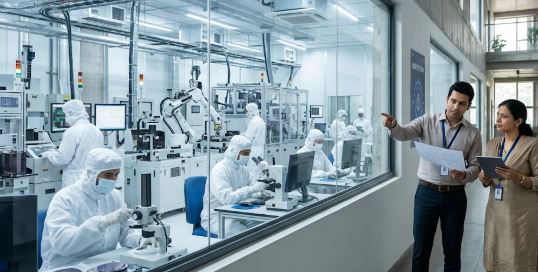
India’s semiconductor industry is gaining momentum as the country works to build a stronger domestic electronics manufacturing ecosystem. Growing demand for chips, government support and investment in new manufacturing facilities are creating opportunities that extend well beyond chip production.
Semiconductors are essential to everyday technologies, from smartphones and automobiles to telecom equipment, renewable energy systems and artificial intelligence. As these industries expand, the need for reliable chip supplies and specialised manufacturing services is becoming increasingly important.
For Indian startups and micro, small and medium enterprises (MSMEs), this shift presents an opportunity to participate in a high-value industry. Businesses do not necessarily need to manufacture chips themselves. They can also support the sector through precision engineering, specialised materials, equipment maintenance, testing services and technology development.
The challenge will be to identify areas where domestic businesses can offer reliable products, competitive pricing and the technical expertise required by semiconductor manufacturers.
Government Investment Is Supporting Industry Growth
India’s semiconductor ambitions have received substantial policy support. The original Semicon India Programme was launched with an outlay of ₹76,000 crore to encourage investment in semiconductor and display manufacturing and strengthen domestic capabilities.
The broader strategy aims to develop an ecosystem covering chip design, fabrication, assembly, testing, packaging and supporting technologies. Investments in semiconductor projects can also generate demand for industrial suppliers, engineering services and skilled professionals.
This wider network is particularly important for smaller businesses. Every manufacturing facility depends on reliable suppliers, equipment servicing, quality assurance and logistics. As the ecosystem develops, companies that can meet these requirements may find opportunities to establish long-term commercial relationships.
However, the industry’s growth will depend on more than government incentives. Access to technology, skilled workers, dependable infrastructure and competitive production costs will also influence how quickly India develops its domestic capabilities.
Chip Design Creates Opportunities for Startups
Chip design is one of India’s established strengths, supported by a large pool of engineers and technology professionals. This foundation offers opportunities for startups interested in developing specialised chips and electronic products.
One potential route is the fabless business model, under which companies design semiconductors and develop their intellectual property while outsourcing manufacturing to specialised fabrication facilities.
Startups can explore applications in automotive electronics, industrial automation, connected devices, telecommunications and AI-related technologies. Focusing on a particular industry or technical requirement can help a company differentiate its products and build expertise.
For example, businesses developing chips for specific industrial applications may be able to serve customers looking for customised performance, power efficiency or reliability.
Turning a design into a commercial product, however, requires investment in testing, validation, intellectual property protection and customer development. Access to experienced engineers and suitable design tools is also essential.
Advanced Packaging and Testing Offer New Business Potential
Producing a semiconductor involves several stages beyond wafer fabrication. Chips must be assembled, packaged and tested before they can be incorporated into finished electronic products.
As India develops its assembly and testing capabilities, opportunities may emerge for suppliers of precision components, packaging materials, thermal management systems and testing equipment.
Businesses with expertise in industrial automation, precision manufacturing and equipment maintenance may also be able to adapt their capabilities to serve semiconductor facilities.
For MSMEs, specialising in a particular component or support service may be a more practical entry point than investing in an entire chip manufacturing operation.
Quality will be a decisive factor. Semiconductor customers require consistent performance, controlled production processes and reliable delivery. Companies that can meet these expectations may be better positioned to secure repeat orders and expand alongside their customers.
Specialty Materials Could Strengthen Domestic Supply Chains
Semiconductor manufacturing relies on highly specialised inputs, including high-purity chemicals, industrial gases, silicon wafers and precision-engineered components. These materials must meet strict specifications because even minor impurities or variations can affect production quality.
This creates potential opportunities for Indian businesses in specialty chemicals, filtration, quartz and graphite components, cleanroom services and industrial equipment support.
MSMEs already working in chemicals, engineering or precision manufacturing may be able to explore related opportunities. However, entering this market requires more than adapting an existing product. Businesses must demonstrate that their materials and components meet the technical standards expected by semiconductor manufacturers.
Investment in testing, quality management and skilled personnel may therefore be necessary before suppliers can compete effectively.
Developing dependable local suppliers could help improve supply-chain resilience and reduce exposure to international disruptions. For emerging businesses, the most promising approach may be to focus on a specialised requirement where they can build genuine technical expertise.
Electric Vehicles and Renewable Energy Expand the Opportunity
Semiconductor demand is closely connected to the growth of electric mobility, renewable energy and advanced industrial equipment.
Power electronics, including technologies based on silicon carbide and gallium nitride, are important in applications that require efficient power conversion and reliable performance under demanding conditions.
Potential opportunities include electronic components, power modules, charging infrastructure, thermal management and specialised testing services.
As manufacturers develop products for electric vehicles, energy storage and renewable power systems, demand for efficient electronic components could create opportunities for domestic suppliers.
Businesses entering these segments will need to evaluate customer requirements, production costs and the maturity of the technology. A clear understanding of the target market will be important in deciding where to invest.
Skilled Workers and Testing Services Will Be Essential
A growing semiconductor industry needs professionals across a wide range of roles, including chip design, equipment operation, testing, manufacturing and quality assurance.
This creates opportunities for technical institutes, specialised training companies and laboratories that can provide practical, industry-relevant learning. Courses in electronics manufacturing, embedded systems, semiconductor fundamentals and testing procedures may help prepare workers for emerging requirements.
Testing and validation services could also become more important as manufacturers seek to improve product reliability and meet customer specifications.
For businesses in this segment, success will depend on access to qualified instructors, appropriate equipment and training programmes that reflect actual industry needs.
Challenges Businesses Must Consider
Despite its potential, the semiconductor industry is not an easy market to enter. High technical requirements, investment costs, lengthy supplier approval processes and competition from established international companies can make expansion difficult.
Smaller businesses may also face challenges in securing financing, recruiting experienced employees and maintaining the quality standards required by large manufacturers.
A careful entry strategy is therefore essential. Rather than investing heavily in an unfamiliar segment, businesses can begin by assessing their existing strengths, identifying a specific customer requirement and developing the capabilities needed to meet it.
Partnerships with established manufacturers, research institutions and industry networks can help companies understand technical requirements and build credibility. Financial planning is equally important because product development and supplier approval may take time.
The Road Ahead for India’s Semiconductor Supply Chain
India’s semiconductor ambitions are creating opportunities across a broad range of businesses. Chip design, advanced packaging, precision engineering, specialised materials, testing and workforce development can all contribute to a stronger domestic ecosystem.
For startups and MSMEs, the opportunity lies in becoming reliable partners to manufacturers rather than competing with large semiconductor companies on every front. Businesses that focus on specialised products, invest in quality and understand customer needs may be able to build sustainable positions in the supply chain.
Over time, a stronger network of domestic suppliers could support manufacturing growth, create skilled employment and help Indian companies participate more actively in global electronics production.
India’s semiconductor journey will not be defined by fabrication plants alone. The businesses that supply, maintain, test and support these facilities will also play an important role in turning the country’s manufacturing ambitions into lasting commercial opportunities.