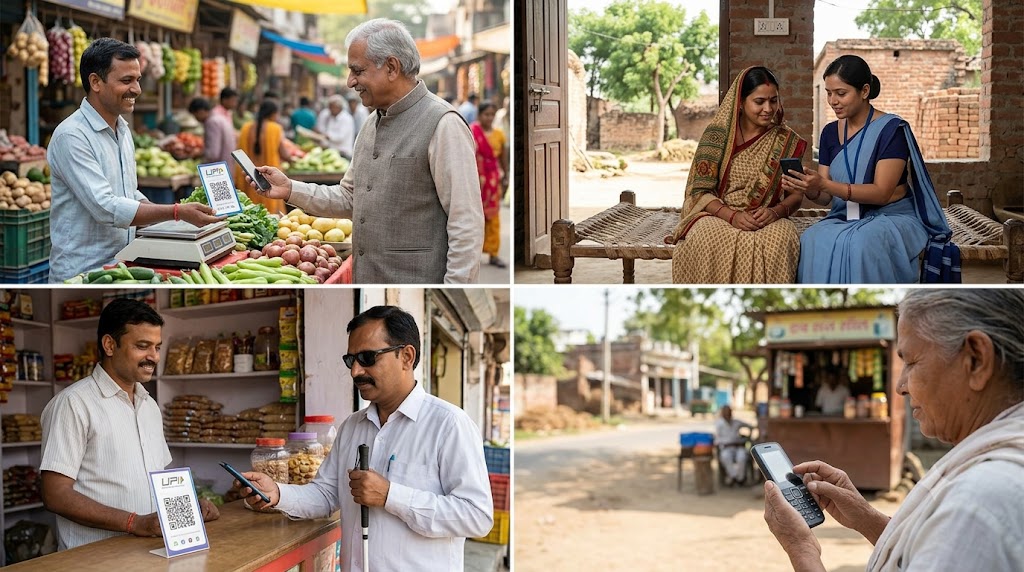
India’s digital payments ecosystem has transformed everyday financial transactions, making it easier for consumers to pay bills, transfer money and shop without carrying cash. From small neighbourhood stores to large retailers, QR code payments and the Unified Payments Interface (UPI) have become an integral part of the country’s financial landscape. Faster transactions, widespread smartphone use and affordable mobile internet have helped bring digital payments to millions of people.
However, the benefits of this transformation are not equally accessible to everyone. Persons with disabilities, rural women, senior citizens, people using basic mobile phones and communities with limited internet connectivity continue to face practical difficulties. For these groups, digital payments can remain complicated, unreliable or dependent on assistance from others.
India has made substantial progress in expanding digital financial services, but the next stage of development must focus on making them easier to understand, safer to use and accessible to people with different needs. Greater inclusion can improve household financial management, support small businesses and strengthen participation in the formal economy.
Digital Payments Have Changed Everyday Business
UPI has simplified payments by enabling money transfers directly between bank accounts, often within seconds. Consumers can pay for groceries, transport, utilities and other daily expenses through mobile applications, while merchants can receive payments without investing in expensive card-processing equipment.
For small businesses, digital transactions can reduce the burden of handling cash and make sales records easier to maintain. These records may help business owners monitor revenue and document their financial activity when applying for formal credit, although lenders continue to assess other eligibility criteria.
Digital payments can also make financial transactions more convenient for people living far from bank branches. Combined with mobile banking and government-backed financial inclusion initiatives, they have expanded the range of services available beyond traditional banking channels.
Yet, the availability of digital infrastructure does not guarantee that every individual can use it effectively. Financial inclusion requires more than a bank account or a payment application. It also depends on digital literacy, accessible technology, reliable connectivity and confidence in the security of transactions.
Accessibility Remains a Major Challenge
For persons with disabilities, digital payments can offer greater independence by reducing the need to visit physical banking locations. However, inaccessible application design can prevent users from completing transactions without assistance.
Visually impaired customers may struggle with unlabeled buttons or applications that do not work properly with screen readers. People with limited hand mobility may find small controls difficult to operate, while complicated authentication procedures can make routine payments unnecessarily challenging.
These barriers can affect privacy as well as convenience. When users must ask someone else to enter payment details or verify transactions, they may have less control over their financial information.
Payment providers can address these problems by introducing screen-reader-compatible interfaces, voice guidance, clear audio confirmations, larger interactive controls and simpler navigation. Authentication methods should accommodate different physical abilities while maintaining appropriate security.
Accessible design also benefits older adults and people who are unfamiliar with digital technology. Making applications easier to navigate can therefore expand usability across a much wider population.
Rural Women Need Greater Digital Financial Independence
Digital banking has created opportunities for women to receive government benefits, manage savings and participate in economic activities. Nevertheless, access to a bank account does not always translate into independent use of financial services.
Women in rural and economically disadvantaged communities may have limited access to smartphones, reliable internet connections or practical digital training. In some households, financial decisions and control over mobile devices remain concentrated among male family members.
These constraints can make it difficult for women to check account balances, transfer money, pay suppliers or manage small businesses independently. Limited familiarity with digital security can further discourage them from using payment applications.
Feature-phone payment services, including UPI123PAY, provide an alternative to conventional smartphone-based payments through supported methods. Their usefulness, however, depends on awareness, accessibility and the availability of clear instructions in local languages.
Community organisations, self-help groups and banking correspondents can help women develop practical skills through demonstrations and hands-on training. Learning how to verify transactions, protect PINs and identify fraudulent requests is just as important as learning how to make a payment.
Greater digital financial independence can help women manage household expenses, participate in local commerce and exercise more control over their earnings.
Helping Senior Citizens Use Digital Services Safely
Many senior citizens continue to prefer cash because it is familiar and easy to manage. Digital payment applications may appear complicated, particularly for people who have limited experience with smartphones or are concerned about losing money to fraud.
Forgotten passwords, changing application layouts and difficult authentication procedures can discourage older users. Some depend on relatives to complete transactions, which may be convenient but can reduce their independence.
Banks and payment providers can improve the experience by offering simpler interfaces, clear transaction confirmations and accessible customer support. Community-level digital literacy programmes can also teach older people how to check payment details, recognise suspicious messages and report fraudulent transactions.
Importantly, the expansion of digital payments should not eliminate access to cash or assisted banking. Older people should be able to adopt digital services at their own pace and retain alternatives that suit their circumstances.
Connectivity and Device Limitations Restrict Participation
Reliable connectivity is essential for many digital payment services, but network quality and device availability vary across India. People in remote areas may experience interrupted connections, while users with basic mobile phones may be unable to access features designed primarily for smartphones.
Language can create another barrier. Technical instructions and unfamiliar financial terminology may discourage first-time users, particularly those with limited formal education.
Feature-phone solutions can extend digital payment access to people who do not own smartphones. However, wider adoption also requires dependable telecommunications networks, straightforward instructions and effective customer support.
Payment services must be designed around the realities of different users rather than assuming that everyone has a modern smartphone, consistent internet access and the confidence to navigate complex applications.
Small Merchants Need Reliable Payments and Fair Practices
Digital payments have helped street vendors, local shops and small service providers accept money more conveniently. QR codes have lowered the entry barrier for merchants who previously found electronic payment equipment expensive or impractical.
Despite these advantages, small businesses can face difficulties when payments fail, refunds are delayed or transaction confirmations are unclear. Fraudulent payment screenshots and misleading messages can also create losses and disputes.
For merchants operating on narrow profit margins, resolving such problems can consume valuable time and disrupt daily operations. Payment providers should therefore offer transparent information about charges, dependable transaction notifications and accessible complaint-resolution systems.
Digital payment records can improve bookkeeping and help merchants understand their cash flow. Over time, better financial records may support formal business growth, although digital payment acceptance alone does not guarantee access to financing.
Maintaining confidence among small merchants is essential to ensuring that digital payments remain a practical and affordable business tool.
Stronger Fraud Protection Can Build Public Confidence
The growing use of digital payments has increased the importance of financial awareness and fraud prevention. Scammers may impersonate bank officials, distribute deceptive links or persuade users to reveal confidential information.
People who are new to digital banking may find it particularly difficult to distinguish genuine payment requests from fraudulent ones. Clear public guidance can reduce this risk.
Users should never share their UPI PIN or OTP with another person. A UPI PIN is used to authorise certain transactions, not to receive money. Before approving a payment, users should verify the recipient’s details and amount. Merchants should confirm that money has actually reached their account rather than relying on screenshots or messages.
Banks and payment companies must also strengthen fraud monitoring, make reporting procedures easier to follow and provide timely assistance when transactions go wrong. Security systems should protect customers without creating unnecessary obstacles for people with disabilities or limited digital skills.
Building a More Inclusive Digital Economy
India’s digital payments revolution has created a strong foundation for a more connected financial system. Sustaining this progress will require greater attention to the people who still struggle to use digital services independently.
Government agencies, banks, fintech companies and payment networks should prioritise accessible applications, regional-language support, digital literacy programmes and reliable connectivity. Progress should be assessed not only through transaction volumes but also through successful payment completion, user confidence, accessibility and the quality of support available when problems arise.
Digital payments can help households manage money more conveniently, allow small businesses to maintain better records and expand participation in formal financial services. These benefits, however, depend on making the system usable for people across different income groups, age categories, abilities and locations.
Cash and assisted banking must remain available for those who need them. Financial inclusion should expand people’s choices rather than require everyone to follow the same path.
India’s next phase of digital development must place equal importance on convenience, affordability, accessibility and trust. A more inclusive payment ecosystem will not only improve the daily financial lives of underserved communities but also help small businesses and households participate more fully in the country’s growing digital economy.