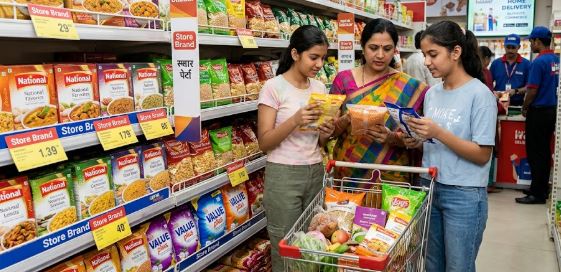
India’s retail market is experiencing a noticeable shift in the way people shop. Consumers who once preferred familiar national brands are increasingly exploring store-owned products that promise similar quality at more affordable prices. From groceries and household essentials to clothing, beauty and personal care, private labels are becoming an important part of the country’s changing consumption patterns.
The growing popularity of these products reflects a wider change in household spending. As shoppers become more conscious of prices and compare products more carefully, brand loyalty is increasingly influenced by the value a product delivers. For retailers, this presents an opportunity to build their own brands, strengthen customer relationships and create new sources of revenue.
Private labels are no longer simply cheaper alternatives placed on store shelves. They are emerging as a strategic business category that could influence pricing, competition and product development across India’s retail industry.
Indian Consumers Are Becoming More Value Conscious
For households managing everyday expenses, small price differences can add up over time. Groceries, cleaning products, packaged foods and personal care items account for regular spending, making these categories natural starting points for consumers looking to save money.
Private labels offer shoppers another option. These products are developed or marketed under a retailer’s own brand, allowing the business to design its range around customer preferences and targeted price points.
When a store-brand product performs well and costs less than an established alternative, consumers may be willing to make the switch. The decision is often practical: shoppers want products that meet their needs without putting unnecessary pressure on household budgets.
This does not mean established brands are losing all their appeal. Many consumers continue to prefer familiar products when they believe the quality, performance or experience justifies a higher price. However, shoppers are becoming more selective about where paying extra makes sense.
For consumer-goods companies, this creates a more competitive environment. Brands must demonstrate their value rather than depend entirely on recognition and long-standing customer habits.
Private Labels Are Moving Beyond the Budget Segment
Private labels were traditionally associated with basic products designed primarily to compete on price. That perception is gradually changing as retailers expand into categories where product quality, design, convenience and customer experience matter.
In grocery retail, store brands can cover staples, packaged foods, snacks and everyday household supplies. In fashion, retailers can develop collections that respond to changing trends and local preferences. Beauty and personal care offer further opportunities to introduce products at accessible prices while catering to specific customer needs.
This expansion allows retailers to compete on more than affordability. A carefully developed private-label range can give shoppers a reason to choose one store over another, particularly when the products offer a combination of quality, convenience and competitive pricing.
However, a low price alone cannot sustain demand. Consumers expect products to remain consistent from one purchase to the next. Poor quality, misleading descriptions or unreliable availability can quickly weaken confidence in a retailer’s own brand.
As private labels expand, product testing, dependable sourcing and quality control will become increasingly important to their commercial success.
Why Private Labels Make Business Sense for Retailers
For retailers, developing their own brands offers greater control over product specifications, packaging, pricing and promotional decisions. Instead of depending entirely on established manufacturers, businesses can build product ranges around the preferences of their customers.
Private labels can also create opportunities for stronger gross margins. Retailers may have more flexibility over sourcing and pricing, although actual profitability depends on production costs, distribution, marketing, storage and sales volumes.
The benefits extend beyond the profit earned on individual products. When shoppers regularly purchase a preferred store brand, they may be more likely to return to the same retailer. Over time, this can strengthen customer loyalty and help businesses distinguish themselves from competitors.
Retailers can also respond more quickly to changing demand by introducing new products, adjusting pack sizes or testing different price points. This flexibility is particularly valuable in a market where consumer preferences and purchasing habits continue to evolve.
Yet building a successful private-label business requires investment and careful planning. Retailers must identify reliable suppliers, maintain product standards, manage inventory and address customer complaints. The opportunity is substantial, but profitability depends on balancing cost efficiency with consistent quality.
Online Shopping and Quick Commerce Create New Opportunities
The expansion of online grocery shopping and quick-commerce services is opening additional routes for private-label growth. Digital platforms make it easier for customers to compare prices, ingredients, pack sizes and product descriptions before making a purchase.
Retailers can place their own brands alongside established products, giving shoppers a convenient way to evaluate alternatives. Digital channels also provide valuable information about purchasing patterns, repeat orders and changing demand.
This information can help businesses identify popular products, improve inventory planning and develop offerings for specific customer groups. Artificial intelligence and data analytics can further support demand forecasting, product recommendations and stock management.
For retailers, the combination of private labels and digital distribution creates an opportunity to build a more distinctive shopping experience. It can also help them develop products around frequent purchases, encouraging customers to return to the platform.
However, online visibility does not automatically translate into lasting demand. Customers may try a product because it is inexpensive or prominently displayed, but repeat purchases depend on product performance, availability and overall satisfaction.
Established Brands Face Growing Competitive Pressure
The rise of private labels is creating new challenges for established fast-moving consumer goods companies. Manufacturers that have traditionally relied on brand recognition and extensive distribution networks must now compete with retailers that control the shopping environment and offer their own alternatives.
When a lower-priced product delivers a satisfactory experience, consumers may question whether an established brand’s price premium is justified. This can encourage manufacturers to review pricing strategies, introduce product improvements and communicate their advantages more clearly.
Established brands still have important strengths, including consumer trust, familiar product formulations, innovation and extensive reach. Their challenge is to make those strengths relevant to shoppers who are increasingly careful about spending.
Competition from private labels could encourage businesses across the industry to improve quality, develop new products and offer more compelling value. For consumers, this may translate into a wider selection of products at different price points.
The impact will vary across categories. Shoppers may be more willing to experiment with some everyday essentials than with products where performance, reputation or personal preference carries greater weight.
Smaller Manufacturers Could Benefit From the Shift
Private-label expansion is also creating opportunities for Indian manufacturers that can produce goods to meet retailers’ requirements. Instead of investing heavily in building a consumer-facing brand, manufacturers may be able to supply products for established retail networks.
Such partnerships can provide access to larger orders and wider distribution. They may also encourage investment in production capacity, packaging, quality systems and operational efficiency.
However, the economics can be demanding. Retailers may expect competitive prices, consistent quality and strict delivery schedules. Manufacturers that depend heavily on a small number of buyers may also have limited bargaining power.
To benefit from this trend, suppliers need to maintain reliable production standards, manage costs carefully and build commercially sustainable relationships with retailers.
For the wider economy, successful partnerships could create opportunities for domestic suppliers and strengthen connections between manufacturing and organised retail. These gains, however, depend on fair commercial terms and the ability of suppliers to earn viable returns.
Quality and Trust Will Decide the Winners
The long-term success of private labels will depend on whether retailers can turn first-time buyers into regular customers. An attractive price may encourage a purchase, but consistent quality is what builds confidence.
Retailers must pay close attention to sourcing, product safety, accurate labelling and customer feedback. They also need to understand that expectations differ across product categories. A strategy that works for packaged groceries may not be equally effective for clothing, beauty or personal care.
Clear communication is essential. Consumers should be able to understand what they are buying, compare products fairly and make informed decisions without being misled by packaging or promotional claims.
Retailers that treat their private labels as long-term brands, rather than simply cheaper substitutes, will be better positioned to establish credibility in the market.
A New Chapter for India’s Retail Industry
The rise of private labels reflects a deeper transformation in India’s consumer economy. Shoppers are becoming more deliberate about spending, while retailers are looking for ways to strengthen margins, differentiate their offerings and build lasting customer relationships.
For households, private labels provide additional choices and the possibility of meaningful savings. For retailers, they offer greater control over product strategy and new opportunities to develop profitable categories. For established manufacturers, they increase competitive pressure and make product differentiation more important.
Private labels are unlikely to replace national brands entirely. Instead, the market is likely to evolve around a wider mix of products serving different budgets, preferences and expectations.
Ultimately, the future of private labels in India will depend on a straightforward commercial principle: consumers may be attracted by lower prices, but they return when products deliver dependable value. Retailers that combine affordability with quality, transparency and customer trust could gain a lasting advantage as India’s retail landscape continues to change.