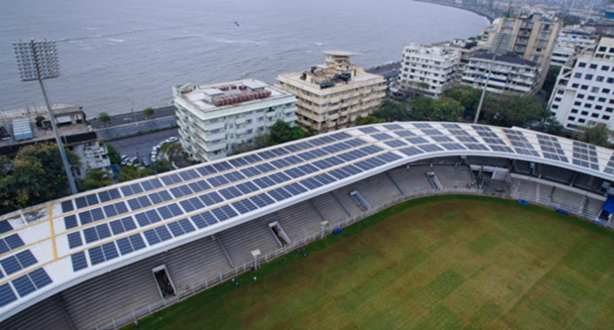
India’s rooftop solar revolution is gaining momentum, but its real success will depend on how effectively the benefits reach ordinary households. Through the PM Surya Ghar: Muft Bijli Yojana, the government is encouraging families to generate their own electricity, reduce monthly power expenses and participate in the country’s clean energy transition. While subsidies and digital services are making installations more accessible, upfront costs, financing challenges and awareness gaps continue to influence adoption. The next phase of India’s solar journey must focus on making rooftop systems affordable, reliable and practical for households across income groups.
Rooftop Solar Moves Into the Mainstream
For many Indian families, electricity bills are a recurring household expense that becomes more burdensome as the use of air conditioners, refrigerators, water pumps and other appliances increases. Rooftop solar offers a way to generate electricity at home and potentially reduce dependence on power purchased from the grid.
The PM Surya Ghar: Muft Bijli Yojana has given this opportunity a significant push. The programme aims to support rooftop solar installations in one crore households, with an approved government outlay of ₹75,021 crore.
The scheme’s expansion reflects a broader shift in India’s renewable energy ambitions. Solar power is no longer only a large-scale infrastructure investment involving utility companies and industrial projects. It is increasingly becoming an option that individual households can consider as part of their long-term financial planning.
However, the number of installations alone will not determine the programme’s success. Its lasting impact will depend on whether households can afford the systems, understand the benefits and receive dependable service after installation.
Government Subsidies Make Solar More Accessible
The initial cost of installing solar panels has traditionally discouraged households from making the switch. Although solar systems can deliver savings over time, equipment, installation and related expenses require an upfront investment that may be difficult for families with limited savings.
The government subsidy under PM Surya Ghar is designed to reduce this burden. Under the scheme’s standard central financial assistance structure, eligible residential consumers can receive ₹30,000 for a 1 kW system, ₹60,000 for a 2 kW system and ₹78,000 for systems of 3 kW or more, subject to applicable conditions.
Eligible households may also have access to collateral-free, low-interest financing for qualifying installations. Together, these measures can reduce the initial financial barrier and make solar power more accessible to middle-income families.
Nevertheless, a subsidy does not make every installation free. Households must evaluate the remaining cost, financing terms, electricity consumption and expected generation before committing to a system.
Can Rooftop Solar Actually Reduce Electricity Bills?
The financial appeal of rooftop solar lies in its potential to lower the amount of electricity a household needs to purchase from the grid. The actual benefit depends on the system’s capacity, local sunlight conditions, rooftop suitability and the family’s consumption patterns.
A household with regular daytime electricity use may be able to consume a substantial portion of the power generated by its panels. Where applicable regulations and metering arrangements permit, surplus electricity can be exported to the grid.
The scheme’s official guidance indicates that a 3 kW system can generate more than 300 units of electricity per month on average. However, generation varies by location, weather, shading and installation quality, so this should not be treated as a guaranteed monthly output.
Similarly, a zero electricity bill is not assured for every household. Fixed charges, consumption beyond solar generation and local billing rules can affect the final amount payable.
For consumers, the most useful starting point is to review electricity bills over several months and compare the household’s actual requirements with a realistic estimate from a qualified installer.
Why Affordability Remains a Challenge
Even with government support, the initial investment can remain a concern for households that have limited savings or irregular incomes. Some families may hesitate to take a loan for an installation whose savings will accumulate gradually over several years.
Access to reliable installers is another important consideration. Consumers need confidence that the equipment meets appropriate standards, the installation is safe and warranties and maintenance services will remain available.
Housing arrangements can also complicate adoption. Residents of rented homes may not have permission to install panels, while apartment dwellers often face restrictions involving shared rooftops, collective approvals and the distribution of electricity benefits.
These challenges show why India’s rooftop solar expansion cannot depend on subsidies alone. Transparent pricing, efficient approvals, suitable financing and dependable after-sales service are equally important.
Bringing Solar Power to Rural and Low-Income Households
The wider promise of rooftop solar lies in making clean energy accessible beyond financially comfortable urban households.
Rural families and economically disadvantaged consumers may benefit from lower electricity expenses, but they can also face greater barriers in accessing credit, comparing technical options and navigating installation procedures.
Collective implementation models, including utility-led aggregation, can help address some of these difficulties by coordinating installations and simplifying the process for eligible households. Community outreach and local technical support can further improve awareness and confidence.
For the programme to become more inclusive, consumers need clear answers about installation costs after subsidies, loan repayments, expected electricity savings and maintenance requirements.
The emphasis must remain on practical affordability rather than simply increasing the number of applications or installations.
Rooftop Solar Can Create Opportunities for Small Businesses
The expansion of residential solar also offers opportunities for India’s business and employment ecosystem.
Installations require a network of manufacturers, equipment suppliers, transport providers, electricians, technicians and maintenance professionals. As demand grows, local enterprises can develop services around system installation, inspections, repairs and performance monitoring.
The scheme’s original design projected employment opportunities across manufacturing, logistics, supply chains, sales, installation and operations. Realising this potential will require trained workers, consistent quality standards and sustainable demand.
For small businesses, the opportunity extends beyond selling solar equipment. Providing reliable installation and after-sales support can help local enterprises build long-term customer relationships while contributing to the growth of the clean-energy sector.
What India Needs to Do Next
The next phase of rooftop solar adoption must focus on the everyday concerns of households.
Faster subsidy processing, simpler installation procedures and transparent financing can reduce uncertainty. Consumers also need access to reliable information about equipment quality, system capacity, expected savings and the difference between lower bills and completely free electricity.
At the same time, training local technicians and strengthening maintenance networks can help ensure that installed systems continue to deliver value. Apartment communities and households without suitable rooftops also need viable alternatives where regulations and local infrastructure permit them.
Most importantly, solar adoption should be treated as a long-term household investment rather than a short-term promotional opportunity. Families must be able to make decisions based on their actual energy needs and financial circumstances.
The Road Ahead
India’s rooftop solar push represents an opportunity to connect clean-energy development with household financial benefits. By generating electricity at home, families with suitable rooftops can potentially reduce recurring expenses while contributing to the country’s renewable energy ambitions.
Government subsidies have made this transition more accessible, but lasting progress will depend on affordability, consumer awareness, reliable installations and effective support after purchase.
The real measure of success will be whether rooftop solar becomes a practical option for households across income groups, rather than remaining concentrated among those who can comfortably afford the initial investment.
India’s solar revolution will achieve its greatest impact when clean energy becomes not just an environmental choice, but a reliable and financially sensible option for ordinary families.