
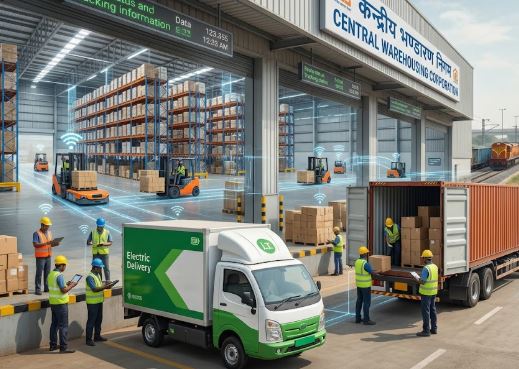
India’s logistics industry is entering a new phase in which efficient delivery has become a key business advantage. As online commerce expands, manufacturing grows and customer expectations rise, companies are looking beyond transportation alone. They need supply chains that can anticipate demand, track shipments accurately and respond quickly to disruptions.
Technology is helping businesses meet these demands. Artificial intelligence, digital tracking, automated warehouses and connected transport systems are changing how goods move across the country. For businesses, these developments offer opportunities to improve efficiency, manage operating costs and reach customers more reliably. They are also creating new markets for logistics technology providers, warehouse operators and specialised service businesses.
India’s Logistics Market Offers Significant Growth Potential
India’s logistics sector is projected to expand substantially over the coming years, supported by infrastructure development, manufacturing activity, e-commerce and domestic consumption. This growth is increasing demand for transportation, warehousing and integrated supply chain services.
The challenge is to move goods more efficiently as volumes increase. Government estimates put India’s logistics costs at ₹24.01 lakh crore, equivalent to 7.97% of GDP in 2023–24. The estimated burden is particularly significant for smaller enterprises, which often have fewer resources to absorb transportation and distribution expenses.
For these businesses, affordable access to digital tools, shared warehousing and reliable delivery services can help reduce inefficiencies and improve competitiveness. Better logistics management can also help sellers reach customers beyond their immediate markets without making substantial investments in their own distribution networks.
Artificial Intelligence Makes Supply Chains Smarter
Artificial intelligence is changing how logistics businesses plan deliveries and manage resources. By analysing traffic patterns, order volumes, delivery locations and vehicle availability, digital systems can help companies identify efficient routes and allocate vehicles more effectively.
Predictive analytics can also help businesses anticipate seasonal demand and position inventory closer to customers. This can reduce unnecessary transportation, limit excess stock and improve order fulfilment.
The need for stronger supply chains is becoming increasingly important as businesses prepare for market fluctuations and unexpected disruptions. Better forecasting, supplier coordination and inventory planning can help companies respond more quickly when demand or transportation conditions change.
For logistics operators, these tools can support better vehicle utilisation and more reliable delivery schedules. However, their effectiveness depends on accurate data, appropriate technology and well-managed operations.
Smart Warehousing Is Transforming Storage and Distribution
Warehouses are evolving from basic storage facilities into digitally managed distribution centres. Connected sensors, automated inventory systems and intelligent monitoring tools can improve stock accuracy, identify operational risks and help businesses process orders more efficiently.
India is also applying these technologies to essential supply chains. In 2026, an AI- and Internet of Things-enabled smart warehousing system was introduced across 215 foodgrain warehouses operated by the Central Warehousing Corporation, with further deployment planned across additional warehouses.
Such developments demonstrate how digital systems can improve monitoring, record-keeping and operational visibility. For businesses, similar technologies can help reduce inventory errors, improve the use of warehouse space and speed up order processing.
The growing use of outsourced warehousing and fulfilment services also creates opportunities for smaller businesses. Instead of building their own facilities, companies can use shared logistics infrastructure to store goods and manage orders as demand changes.
Real-Time Tracking Builds Customer Trust
Customers increasingly expect accurate information about their orders, including shipment status and estimated delivery times. Real-time tracking is helping logistics providers meet these expectations by making delivery information more accessible.
When transport operators, warehouses and distribution centres share shipment data, businesses can identify delays earlier and coordinate responses more effectively. Manufacturers can monitor incoming materials, while retailers can plan stock replenishment with greater confidence.
India’s digital logistics initiatives are also supporting improved information exchange across the supply chain. Greater visibility can reduce uncertainty, strengthen coordination and help businesses make better operational decisions.
For companies selling online, transparent delivery information is more than a customer service feature. It can improve the buying experience, build confidence and encourage repeat purchases.
Infrastructure and Technology Must Work Together
Digital systems can improve planning, but efficient deliveries also depend on reliable physical infrastructure. Road congestion, delays at transport terminals and weak connections between industrial centres and distribution hubs can still increase delivery times and costs.
Infrastructure initiatives such as PM GatiShakti aim to improve planning and connectivity across transport networks. Dedicated freight corridors can support more efficient rail movement, while better links between road, rail and other transport facilities can help make supply chains more predictable.
When infrastructure improvements are combined with digital tracking and planning, businesses can make better decisions about routes, delivery schedules and inventory placement. This can reduce avoidable delays and improve the use of vehicles and storage facilities.
New Business Opportunities for Startups and MSMEs
The growing use of logistics technology is creating opportunities beyond established transport companies. Startups can develop solutions for route optimisation, fleet management, warehouse monitoring, inventory tracking and delivery coordination.
Small and medium-sized enterprises can also benefit from shared warehousing, digital order management and integrated delivery services. These solutions can help smaller sellers reach wider markets without investing heavily in their own logistics infrastructure.
There is growing scope for specialised services such as software integration, equipment maintenance, data management and workforce training. Businesses that provide affordable and practical solutions can help logistics operators improve performance without taking on the cost of complex systems.
For emerging companies, the strongest opportunities lie in solving specific operational problems and demonstrating measurable improvements in cost, speed or reliability.
Greener Deliveries Gain Business Importance
Fuel expenses and environmental concerns are encouraging logistics businesses to explore cleaner transportation and more efficient delivery models. Electric vehicles can be suitable for certain delivery operations, particularly where routes are predictable and charging facilities are available.
Digital route planning can complement these efforts by reducing unnecessary travel and improving vehicle utilisation. Better warehouse energy management and more efficient inventory placement can also help limit waste.
However, the economics of greener logistics depend on factors such as vehicle costs, charging infrastructure, operating distances and delivery requirements. Businesses need to assess these considerations carefully to ensure that environmental improvements also support long-term commercial viability.
Challenges Along the Road to Digitalisation
Despite its potential, logistics technology requires investment, skilled workers and reliable data. Smaller operators may struggle with implementation costs, fragmented software systems and limited technical expertise.
Integrating different platforms can also be complicated when businesses work with multiple transport providers and warehouse operators. Cybersecurity and data protection are becoming increasingly important as more shipment and customer information moves through connected systems.
Successful digitalisation requires more than purchasing software or equipment. Businesses need appropriate training, clear performance measures and technology that fits their operational requirements.
A More Connected Future for Indian Logistics
India’s logistics industry is moving towards a model in which technology, infrastructure and business operations work together to improve delivery performance. AI-powered planning, smart warehousing and real-time tracking are helping companies manage costs, strengthen supply chains and respond to rising customer expectations.
The benefits extend across the economy. Large logistics operators can improve network efficiency, while smaller enterprises can gain access to services that were once difficult to afford. Technology startups and specialised service providers can also find new opportunities by addressing practical challenges in transportation, storage and fulfilment.
The next stage of growth will depend on how effectively businesses combine digital innovation with dependable infrastructure, skilled workers and sound financial planning. As these elements come together, India’s logistics sector can become more competitive, making deliveries more predictable, transparent and commercially sustainable.