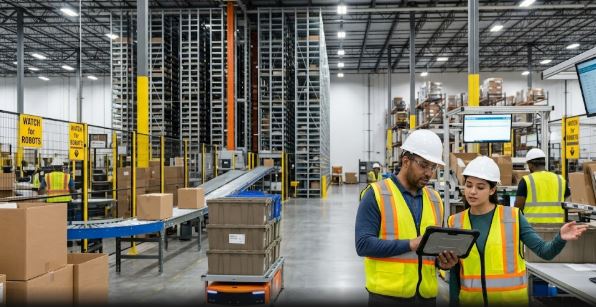
Logistics and warehouse operations are undergoing a major transformation as businesses turn to automation to improve efficiency, reduce operating costs and meet rising customer expectations. From automated storage systems and robotic picking to real-time inventory tracking and artificial intelligence, technology is changing how goods move from warehouses to customers.
The shift is particularly important as e-commerce expands, delivery timelines become shorter and businesses face increasing pressure to manage supply chains more efficiently. Warehouses that once depended heavily on manual processes are adopting digital systems to handle larger order volumes, improve accuracy and make better use of available space.
For logistics companies, manufacturers, retailers and third-party logistics providers, warehouse automation is becoming an important part of long-term business planning. Its value extends beyond faster operations, influencing customer satisfaction, workforce productivity and the overall cost of delivering goods.
Warehouse Automation Is Redefining Daily Operations
Warehouse automation involves using machines, software and connected systems to perform or support tasks that would otherwise require substantial manual effort. These technologies can assist with receiving goods, tracking inventory, storing products, picking orders, packing shipments and preparing deliveries.
Modern warehouses increasingly combine physical equipment with warehouse management systems that coordinate activities across different stages of fulfilment. Conveyor belts can move products between workstations, automated storage and retrieval systems can locate and retrieve items, and mobile robots can transport goods across warehouse floors.
The result is a more connected operating environment in which businesses can monitor stock movements, identify delays and coordinate orders with greater precision.
Automation does not necessarily mean replacing every manual task. In many facilities, the most effective approach combines technology with human supervision, allowing employees to handle exceptions, quality checks and decisions that require experience or judgement.
Faster Order Fulfilment Becomes a Competitive Advantage
The growth of online shopping has changed customer expectations around delivery speed, order accuracy and returns. Retailers and logistics providers must process a growing variety of orders while managing seasonal demand and fluctuating workloads.
Automated picking and sorting systems can help warehouses process orders more quickly by reducing unnecessary movement and directing products towards the appropriate packing or dispatch areas. Software can also organise picking routes and prioritise orders according to delivery schedules.
For businesses, faster fulfilment can improve the customer experience and help reduce delays during busy shopping periods. Accurate order processing also limits the costs associated with incorrect shipments, replacements and returns.
However, delivery performance depends on the entire supply chain. Even an automated warehouse cannot compensate fully for poor transport coordination, inaccurate demand forecasts or delays outside the facility.
Real-Time Inventory Tracking Reduces Business Losses
Inventory management is another area where automation is making a significant difference. Manual stock records can become outdated when goods are moved, orders are processed or returns arrive. These discrepancies may lead to products being unavailable when customers place orders or excess inventory occupying valuable storage space.
Digital warehouse management systems can update stock records as goods move through different stages of the operation. When integrated with barcode scanners, radio-frequency identification technology and other tracking tools, these systems provide better visibility into product locations and stock availability.
For businesses, this information supports more informed purchasing and replenishment decisions. It can help reduce stockouts, prevent unnecessary overstocking and improve coordination between warehouses, suppliers and sales teams.
Better inventory visibility is particularly valuable for retailers handling large product catalogues and manufacturers that depend on the timely availability of components. Accurate stock information can reduce working-capital pressure by helping businesses avoid tying up excessive funds in inventory.
Making Better Use of Warehouse Space
Warehouse space is expensive, particularly in major consumption centres and industrial hubs where land, construction and operating costs can be substantial. As businesses handle more products, expanding storage capacity is not always the most economical solution.
Automated storage and retrieval systems can help companies use available space more effectively, including vertical storage areas. Software-guided placement can also help organise products according to their size, demand and handling requirements.
These improvements may allow businesses to increase storage density and move goods more efficiently within existing facilities. Better space planning can reduce unnecessary movement, improve access to products and support safer working conditions.
The benefits depend on the type of goods being stored, the layout of the facility and the volume of orders processed. Businesses need to evaluate these factors before investing in specialised equipment.
Artificial Intelligence Brings Greater Flexibility to Warehousing
Artificial intelligence is expanding the role of automation beyond repetitive physical tasks. AI-enabled systems can analyse order patterns, identify operational bottlenecks and support demand forecasting.
For example, warehouse software can use historical sales and order information to help businesses anticipate periods of high demand. Managers can then plan inventory, staffing and dispatch schedules more effectively.
Robotics and intelligent routing systems can also help coordinate the movement of goods within a facility. In more advanced operations, machines can adjust certain tasks according to changing workloads, product availability or warehouse conditions.
These capabilities are especially useful for businesses managing several clients, product categories or distribution locations. However, the quality of AI-driven decisions depends on accurate data, reliable system integration and appropriate human oversight.
E-Commerce, Manufacturing and Other Industries Benefit
Warehouse automation is becoming relevant across several industries, although the needs differ from one sector to another.
E-commerce and retail: Online retailers use automation to handle large numbers of individual orders, sort parcels and process returns. Faster fulfilment can help businesses manage promotional events and seasonal shopping peaks.
Manufacturing: Manufacturers depend on the timely movement of raw materials, components and finished products. Automated inventory tracking and material-handling systems can support production schedules and reduce delays caused by missing supplies.
Pharmaceuticals: Pharmaceutical warehouses require careful inventory control, traceability and temperature monitoring for sensitive products. Automated systems can support documentation, stock rotation and controlled handling, but regulatory compliance still requires validated processes and appropriate human supervision.
Food and beverages: Businesses dealing with perishable goods can use digital tracking and stock-rotation systems to monitor expiry dates and prioritise products that need to be dispatched first. Better inventory management can help limit spoilage and reduce waste.
Across these sectors, automation can improve operational consistency, but the right solution depends on product characteristics, safety requirements and business priorities.
The Cost of Automation and the Workforce Challenge
Despite its advantages, warehouse automation involves substantial financial and operational considerations. Purchasing equipment, upgrading facilities, integrating software and training employees can require significant upfront investment.
For smaller logistics companies, these costs may make large-scale automation difficult. A phased approach can be more practical, beginning with barcode-based inventory tracking, warehouse management software or selected automated processes before introducing expensive robotics.
Businesses must also account for maintenance, software updates, equipment downtime and the cost of integrating new systems with existing operations. Automation delivers the greatest value when the technology addresses a clearly identified business problem rather than being adopted simply to follow an industry trend.
The workforce is changing as well. While automation can reduce repetitive lifting, walking and sorting, employees increasingly need skills in system monitoring, equipment operation, troubleshooting and data management. Companies that invest in training can help workers adapt to new responsibilities and make better use of the technology.
Third-Party Logistics Providers Face New Opportunities
Third-party logistics providers, which manage warehousing and distribution for other businesses, have a strong incentive to improve operational efficiency. Their customers expect reliable service, accurate inventory records and the flexibility to accommodate changing order volumes.
Automation can help these providers serve multiple clients more effectively, particularly when warehouse systems support clear inventory separation, flexible workflows and accurate reporting.
For smaller brands, access to an automated logistics partner may also reduce the need to invest in expensive warehouse infrastructure of their own. This can help businesses expand into new markets while focusing on product development, sales and customer relationships.
However, logistics providers must balance technology investment against customer demand and contract requirements. A system that works well for high-volume, standardised products may not be suitable for fragile, irregularly shaped or highly specialised goods.
The Road Ahead for Logistics and Warehouse Operations
Warehouse automation is moving logistics towards a more connected and data-driven operating model. As robotics, artificial intelligence and warehouse management software continue to develop, businesses will have more opportunities to improve inventory accuracy, manage space and respond to changing demand.
The transition is unlikely to follow the same path for every company. Large distribution centres may justify sophisticated robotic systems, while smaller operators may achieve meaningful improvements through better software, scanning technology and process redesign.
Ultimately, successful automation is not about installing the largest number of machines. It is about identifying where delays, errors and unnecessary costs occur, then choosing technologies that address those problems.
Businesses that combine suitable automation with trained employees, reliable data and effective supply-chain planning will be better positioned to improve productivity and meet customer expectations. As logistics becomes increasingly competitive, the ability to move goods accurately, efficiently and reliably will remain a defining factor in business performance.