
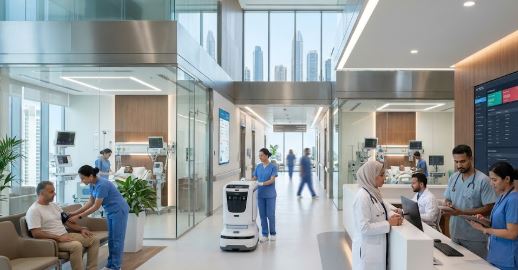
Dubai is strengthening its position as a modern healthcare destination through investments in medical infrastructure, digital services and advanced technologies. Hospitals, clinics and healthcare providers are increasingly adopting digital systems to improve patient care, streamline operations and make medical services more accessible.
This transformation is creating new opportunities for medical technology and healthcare technology companies. Artificial intelligence, connected medical devices, electronic health records and remote patient monitoring are changing how healthcare professionals diagnose conditions, manage patients and deliver treatment.
For technology companies, Dubai offers opportunities to work with hospitals, specialist clinics, diagnostic centres and home healthcare providers. However, success will depend on developing solutions that address real healthcare needs, meet regulatory requirements and integrate smoothly with existing medical systems.
AI-Powered Diagnostics and Clinical Support
Artificial intelligence is becoming an important part of modern healthcare. Medical professionals can use AI-based tools to analyse medical images, identify potential health risks and support clinical decision-making.
In Dubai, healthcare providers can benefit from technologies that help radiologists examine scans, assist doctors with clinical documentation and identify patients who may require early medical attention.
MedTech companies can develop AI-powered diagnostic platforms, medical imaging software and predictive analytics solutions. These technologies can help reduce administrative workloads, support faster assessments and improve the efficiency of clinical teams.
However, AI should support rather than replace medical professionals. Healthcare solutions must be reliable, clinically validated and designed to protect patient safety.
Smart Hospitals and Advanced Medical Infrastructure
Dubai’s healthcare development is creating demand for smarter hospitals equipped with advanced medical technologies. Healthcare facilities are exploring automation, robotics, connected devices and digital systems to improve patient management and hospital operations.
Smart hospital solutions can support several activities, including patient monitoring, equipment management, digital appointments and coordination between medical departments.
Medical technology companies can contribute by offering robotic assistance systems, connected medical equipment, smart hospital software and technologies for remote monitoring.
These solutions can help healthcare providers improve operational efficiency, reduce manual processes and make better use of medical resources. They can also support hospitals in managing growing patient volumes without compromising service quality.
Electronic Health Records and Medical Data Integration
Patient information is often spread across different hospitals, clinics, laboratories and diagnostic centres. When medical records are difficult to access or exchange, healthcare professionals may face delays in understanding a patient’s medical history.
Dubai’s NABIDH health information exchange initiative is an important part of efforts to improve the secure sharing of patient information across the healthcare ecosystem.
This creates opportunities for technology companies developing electronic health record systems, medical data integration platforms and healthcare interoperability solutions.
Companies can help healthcare providers connect different digital systems, organise patient records and make relevant medical information available to authorised professionals.
Better data integration can reduce repeated tests, improve coordination between healthcare providers and support more informed treatment decisions. Patient privacy and secure access controls remain essential.
Remote Patient Monitoring and Home Healthcare
Healthcare is increasingly extending beyond hospitals and traditional clinics. Patients with diabetes, heart conditions, hypertension and other long-term health conditions may require regular monitoring and follow-up care.
Remote patient monitoring allows healthcare professionals to track selected health indicators through connected devices and digital platforms. Wearable sensors, mobile applications and home monitoring equipment can help patients share relevant information with their care teams.
For Dubai’s healthcare market, this creates opportunities for companies offering smart medical devices, telehealth platforms and home healthcare management systems.
These technologies can make follow-up care more convenient, reduce unnecessary hospital visits and help healthcare professionals identify changes in a patient’s condition earlier.
Home healthcare providers can also use digital platforms to coordinate appointments, monitor treatment progress and communicate with patients and caregivers.
Digital Billing, Insurance and Healthcare Administration
Healthcare providers manage a wide range of administrative responsibilities, including appointment scheduling, insurance claims, billing, medical documentation and regulatory reporting.
Manual processes can increase costs, create delays and place additional pressure on hospital staff.
Healthcare technology companies can address these challenges through automated billing systems, revenue cycle management platforms, claims processing tools and digital compliance solutions.
Such systems can help hospitals and clinics reduce paperwork, identify billing errors and improve the management of insurance claims.
For private healthcare providers, efficient administration can improve financial management and allow staff to devote more time to patient services.
Opportunities for Medical Device Companies
Dubai’s expanding healthcare infrastructure also creates opportunities for medical device manufacturers and suppliers. Hospitals and specialist clinics require modern diagnostic equipment, monitoring systems, surgical technologies and rehabilitation devices.
Companies can explore demand for portable diagnostic equipment, connected patient monitors, digital imaging systems and advanced rehabilitation technologies.
There is also potential for devices designed for home healthcare and preventive monitoring. As patients become more interested in managing their health, demand for reliable and easy-to-use medical technologies may increase.
However, medical devices must meet applicable registration, safety and quality requirements before they can be marketed or used in healthcare facilities.
Business Impact on Dubai’s Healthcare Sector
The expansion of healthcare technology can deliver benefits beyond individual hospitals and technology companies.
Improved patient care: Digital records, connected devices and AI-supported tools can help medical teams access information and manage treatment more efficiently.
Greater operational efficiency: Automation can reduce administrative workloads and improve the use of hospital resources.
Growth of private healthcare: Advanced medical technologies can help hospitals and clinics strengthen their services and attract patients seeking specialised treatment.
New business opportunities: Demand for medical software, devices, data management and digital healthcare services can create opportunities for startups, technology providers and international manufacturers.
Employment and skills development: The adoption of digital healthcare systems can increase demand for professionals in medical technology, software development, healthcare data management, cybersecurity and clinical technology support.
Expansion of home-based care: Remote monitoring and telehealth can support more convenient healthcare delivery, particularly for patients requiring regular follow-up.
Key Requirements for Entering Dubai’s Healthcare Technology Market
Although the market offers opportunities, medical technology companies must understand the regulatory and commercial environment before launching their products.
-
Regulatory compliance: Medical devices and healthcare software must meet the applicable UAE and Dubai regulatory requirements. Companies should determine whether their products require registration, approval or additional clinical evidence.
-
Patient data protection: Healthcare platforms must comply with relevant UAE data protection and health information regulations. Companies should pay particular attention to patient consent, secure data handling, access controls and applicable data hosting requirements.
-
Local partnerships: Working with established hospitals, clinics, medical distributors and healthcare groups can help companies understand market requirements and build customer relationships.
-
System integration: New technologies should work effectively with existing hospital systems and relevant health information networks, including NABIDH where applicable.
-
Clinical validation: AI tools and medical devices must demonstrate appropriate safety, reliability and clinical value.
-
After-sales support: Hospitals require maintenance, staff training, technical assistance and reliable product support.
A clear understanding of these requirements can help companies reduce market-entry challenges and build credibility among healthcare providers.
A Growing Market for Healthcare Innovation
Dubai’s healthcare transformation is creating opportunities for companies that can combine medical expertise with practical technology solutions. AI-powered diagnostics, smart hospital systems, electronic health records, remote monitoring and advanced medical devices are becoming important areas of interest for healthcare providers.
The strongest opportunities will come from technologies that solve everyday healthcare challenges rather than simply introducing new digital features. Hospitals need reliable systems, doctors need tools that support clinical work, and patients need accessible and dependable care.
For MedTech and HealthTech companies, Dubai offers an opportunity to participate in a changing healthcare ecosystem. Businesses that prioritise patient safety, regulatory compliance, data protection and effective local partnerships can contribute to better healthcare delivery while building sustainable commercial opportunities.