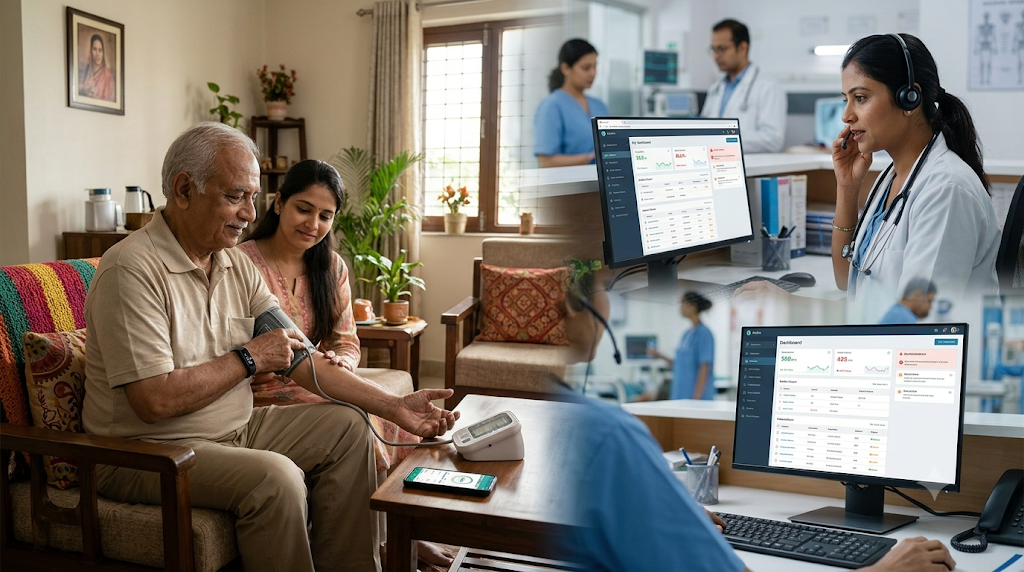
The growing adoption of remote patient monitoring is creating new business opportunities in India’s healthcare technology sector, as hospitals, digital health companies and medical device manufacturers invest in connected care solutions.
India’s healthcare sector is undergoing a significant transformation as technology changes how medical services are delivered, accessed and managed. With rising healthcare needs, increasing awareness of preventive care and wider adoption of digital services, remote patient monitoring is emerging as an important part of the country’s evolving healthcare ecosystem.
Traditionally, patients have depended on hospital visits and periodic medical consultations to monitor their health conditions. However, digital healthcare solutions are gradually changing this approach by allowing medical professionals to track patients’ health conditions beyond hospital settings. Remote patient monitoring (RPM) enables the collection and transmission of health information through connected medical devices, wearable technologies and digital platforms. These solutions help healthcare providers monitor vital health indicators, identify potential warning signs and support timely medical intervention.
The shift towards remote monitoring is particularly relevant for India, where the demand for accessible and affordable healthcare continues to increase. It also presents an expanding business opportunity for technology companies, healthcare startups, medical equipment manufacturers and service providers.
Remote Patient Monitoring Reshapes Healthcare Delivery
Remote patient monitoring is becoming an important component of digital healthcare because it allows patients to remain connected with healthcare professionals without requiring frequent physical visits. Devices such as digital blood pressure monitors, glucose monitoring systems, pulse oximeters, smartwatches and connected cardiac monitoring equipment can collect health information and transmit it to healthcare platforms.
This information enables doctors and medical teams to observe changes in a patient’s condition and make more informed decisions about treatment and follow-up care. For people managing long-term conditions such as diabetes, hypertension and cardiovascular diseases, continuous or regular monitoring can improve the visibility of their health status.
The technology is also helping healthcare providers move towards a more proactive model of care. Instead of depending entirely on occasional consultations, medical teams can use relevant patient data to identify potential concerns earlier and provide appropriate guidance.
For patients living in smaller towns and rural areas, remote monitoring can also improve access to follow-up services, particularly where specialist healthcare facilities are limited. However, it works best as a complement to physical consultations and emergency services rather than a complete replacement for hospital-based treatment.
Digital Healthcare Creates New Business Opportunities
The expansion of remote patient monitoring is opening new commercial opportunities across India’s healthcare technology market. As healthcare institutions increasingly explore digital solutions, demand is growing for connected medical devices, software platforms, data management systems and technology-enabled patient support services.
Healthcare technology companies can develop solutions that connect patients, doctors, diagnostic centres and hospitals through integrated digital platforms. These businesses can generate revenue through device sales, software subscriptions, platform licensing, hospital partnerships and ongoing monitoring services.
For medical equipment manufacturers, the growing market creates an opportunity to develop affordable, connected devices suited to Indian consumers and healthcare providers. Companies producing digital blood pressure monitors, glucose meters, wearable sensors and portable diagnostic equipment can expand their offerings by incorporating connectivity and data-sharing capabilities.
Software developers and healthtech startups can also participate by creating platforms that securely collect, organise and analyse patient information. Solutions that simplify clinical workflows, provide useful health insights and integrate with existing hospital systems could become increasingly valuable.
Hospitals and Healthcare Providers Focus on Operational Efficiency
Remote monitoring is not only changing patient engagement but also influencing how hospitals manage resources and deliver services. Healthcare institutions face pressure to improve service quality while managing operational expenses, patient volumes and limited medical staff.
Digital monitoring platforms can support more structured follow-up programmes, reduce unnecessary routine visits in suitable cases and help healthcare teams prioritise patients who require attention. This can improve the use of medical resources while allowing hospitals to extend care beyond their physical facilities.
For hospitals, the business value lies in developing connected care services that strengthen patient relationships and create additional service opportunities. Remote consultations, post-discharge monitoring and chronic disease management programmes can become part of a broader digital healthcare offering.
However, successful adoption requires investment in technology infrastructure, staff training, data protection and integration with existing medical systems. Healthcare providers must also ensure that remote alerts are reviewed by qualified professionals and that patients receive appropriate medical attention when required.
Artificial Intelligence Strengthens Remote Monitoring Capabilities
Artificial intelligence is adding another dimension to the growth of remote patient monitoring. As connected devices generate increasing volumes of health information, AI-powered platforms can help identify patterns, organise patient data and flag unusual readings for clinical review.
For example, monitoring platforms may help identify changes in blood pressure, heart rate or glucose levels that require further attention. These capabilities can support healthcare professionals in prioritising follow-ups and managing larger patient groups.
The integration of AI with wearable devices and digital health platforms is also creating opportunities for technology companies specialising in healthcare analytics, software development and clinical data management.
Nevertheless, AI-generated insights should support, not replace, medical judgement. Accuracy, clinical validation, transparency and responsible data management will remain essential for building confidence among doctors and patients.
Government Initiatives Support India’s Digital Health Ecosystem
India’s digital healthcare expansion is receiving support from public infrastructure and policy initiatives. The Ayushman Bharat Digital Mission (ABDM) is an important step towards building an interconnected digital health ecosystem through digital health identities and interoperable health records.
Such infrastructure can improve the exchange of health information between patients and healthcare providers, subject to appropriate consent and privacy safeguards. It can also create opportunities for technology businesses developing digital health applications, hospital management systems and connected healthcare services.
The wider expansion of internet connectivity, smartphone adoption and digital payment infrastructure is further supporting the delivery of technology-enabled healthcare services. These developments can help healthtech businesses reach patients beyond major metropolitan markets.
However, affordability, digital literacy, reliable connectivity and access to suitable devices will influence how quickly remote monitoring becomes widely adopted, particularly in rural and underserved communities.
Challenges That Healthcare Technology Businesses Must Address
Despite its potential, remote patient monitoring faces several challenges that businesses cannot afford to overlook.
Data privacy and cybersecurity are among the most important concerns. Health information is highly sensitive, and companies must establish strong safeguards for collecting, storing and sharing patient data. Compliance with applicable data protection requirements and healthcare regulations is essential.
Another challenge is affordability. Advanced monitoring equipment and subscription-based services may remain expensive for many households. Businesses that can offer reliable, cost-effective devices and flexible service models may have an advantage in reaching a wider customer base.
Interoperability is equally important. Different devices and healthcare platforms must be capable of exchanging information effectively. Without proper integration, hospitals may face fragmented data and additional administrative work.
There is also a need to establish trust among doctors and patients. Healthcare professionals must be confident that monitoring systems provide reliable information, while patients need clear guidance on using devices and understanding the information they generate.
Opportunities for Startups and Small Businesses
The expansion of remote patient monitoring is not limited to large hospitals or established medical technology companies. It also creates opportunities for startups and smaller businesses to participate in India’s growing digital healthcare economy.
Entrepreneurs can explore specialised solutions such as affordable wearable devices, remote monitoring software, digital health assistance, patient engagement platforms and technology support services for clinics.
Small technology companies can collaborate with hospitals, diagnostic centres and healthcare professionals to develop customised digital solutions. Businesses with expertise in software development, cloud infrastructure, cybersecurity and data analytics can also serve the healthcare sector without manufacturing medical equipment themselves.
The market may also support new employment opportunities in software engineering, device maintenance, healthcare data management, customer support and digital health operations.
For startups, the strongest opportunities are likely to emerge from solving practical healthcare problems rather than simply introducing new technology. Affordable products, easy-to-use platforms, dependable customer support and effective partnerships will be important factors in building sustainable businesses.
The Future of India’s Remote Healthcare Market
India’s healthcare technology market is moving towards a more connected and data-driven model of service delivery. Remote patient monitoring is expected to play an increasingly important role as healthcare providers look for ways to improve patient follow-up, manage chronic conditions and extend services beyond hospitals.
For businesses, this transformation represents an opportunity to participate in a healthcare ecosystem that increasingly combines medical expertise with digital infrastructure. Device manufacturers, healthtech startups, software companies and healthcare institutions can all benefit from developing solutions that make monitoring more accessible, reliable and affordable.
Ultimately, the success of remote patient monitoring will depend on its ability to deliver measurable value to patients and healthcare providers. Technology alone will not transform healthcare. Strong clinical partnerships, responsible data practices, affordable solutions and patient trust will determine how effectively these innovations translate into sustainable business growth and better healthcare access across India.