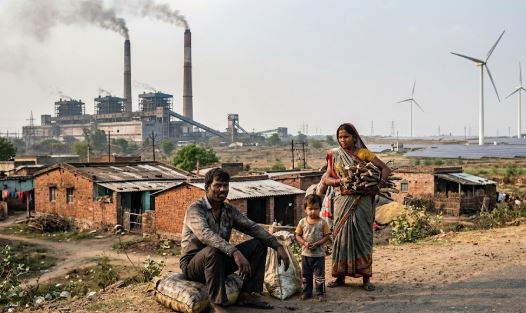
India’s green transition is creating a new economic landscape, attracting investment into renewable energy, electric mobility and cleaner industrial technologies. Solar parks are expanding, wind power is gaining ground and businesses are exploring alternatives to conventional energy. Yet behind this progress lies a difficult question: who pays for the shift away from fossil fuels, and who benefits from the emerging green economy?
For India, the challenge is particularly complex. The country must reduce emissions while meeting the energy needs of a growing population, expanding industries and millions of households seeking better living standards. That means building cleaner energy infrastructure without making electricity unaffordable, disrupting livelihoods or weakening industrial competitiveness.
The costs are spread across the economy. Governments must invest in infrastructure, businesses need to upgrade equipment, consumers must navigate the cost of new technologies, and workers in coal-dependent regions face uncertainty about their future. Meanwhile, companies supplying renewable energy equipment, batteries and electric vehicles stand to benefit from a rapidly changing market.
India’s transition will ultimately depend on whether these costs can be managed fairly while ensuring that the benefits of cleaner energy reach beyond investors and large corporations.
A Major Energy Shift, With Coal Still at the Centre
India has made substantial progress in expanding its non-fossil electricity capacity. According to official figures, the country had reached 300.50 GW of non-fossil fuel capacity by July 2026, accounting for more than 54% of its total installed electricity generation capacity at that point. The government is targeting 500 GW of non-fossil capacity by 2030.
However, installed capacity does not tell the complete story. Solar panels and wind turbines do not generate electricity continuously, and their output depends on weather conditions. India must therefore expand transmission networks, energy storage and flexible power sources while maintaining reliable electricity supplies.
Coal remains central to this challenge. Government figures indicate that it supplies more than 70% of India’s electricity generation and close to 55% of its primary energy needs.
The country’s rising electricity demand makes the transition more complicated. Recent reporting in October 2026 highlighted concerns that India may need additional coal-based capacity to maintain reliable power supplies as demand grows and hydropower output fluctuates.
This does not diminish the importance of renewable energy. Instead, it illustrates why the transition requires careful planning. India must expand clean power while ensuring that households, hospitals, factories and essential services continue to receive dependable electricity.
The Hidden Cost of Building a Clean Energy System
The price of the green transition extends beyond the cost of installing solar panels or wind turbines. New transmission lines, battery storage, grid upgrades and electricity distribution improvements all require substantial investment.
A recent report published in October 2026 highlighted the financial consequences of inadequate transmission infrastructure. Renewable energy investments worth approximately ₹84,000 crore were reported to be operating with temporary grid access, while delays in transmitting electricity were associated with potential annual revenue losses of around ₹8,000 crore.
The problem illustrates a fundamental weakness in energy planning: generation capacity can expand faster than the infrastructure needed to deliver its output.
For renewable energy developers, delays can affect revenue and project financing. For electricity distributors, they complicate supply planning. For consumers, they represent a missed opportunity to benefit fully from available clean electricity.
These costs may eventually be reflected in project tariffs, financing requirements or the broader expense of operating the power system. Better coordination between generation and transmission projects could help reduce waste and improve the financial performance of new investments.
Coal-Dependent Workers Face an Uncertain Future
The economic consequences of the transition are especially significant in India’s coal-producing regions.
In states such as Odisha, Jharkhand and Chhattisgarh, coal supports more than mining and electricity generation. It also sustains transport operators, equipment suppliers, contractors, repair businesses, local shops and other services that depend on the industry.
When a mine reduces operations, the effects can spread throughout the local economy. Workers may lose wages, small businesses may experience falling demand and local authorities may face pressure if economic activity declines.
The challenge is not limited to permanent employees. Contract workers, informal service providers and small enterprises may have fewer employment protections and limited financial reserves.
A March 2026 assessment of Indian coal mine workers examined their skills, employment preferences and potential future opportunities, highlighting the importance of understanding workers’ circumstances when planning the energy transition.
Moving into renewable energy is not always straightforward. A worker experienced in mining operations may need additional training to qualify for an electrical, engineering or solar installation role. New jobs may also emerge in different locations, creating relocation costs and family pressures.
A fair transition requires advance planning, not just compensation after jobs disappear. Retraining must be linked to real employment opportunities, while coal-dependent districts need investment in alternative industries, local businesses and essential infrastructure.
Will Green Energy Create Better Jobs?
Renewable energy is generating opportunities in equipment manufacturing, project construction, installation, maintenance and technical services. Battery production, electric mobility and energy-efficient buildings can create further demand for skilled workers.
Small businesses may also benefit by supplying components, providing repair services, maintaining solar installations or supporting charging infrastructure.
However, the quality of these jobs matters as much as their number. Some positions are temporary, particularly during construction, while permanent technical roles may require qualifications that workers in traditional energy industries do not possess.
The transition could therefore produce a mismatch between the jobs being lost and those being created. Workers may need to invest time and money in training without any guarantee of employment.
Businesses and policymakers can narrow this gap by developing industry-linked training programmes, recognising transferable skills and encouraging employers to recruit locally where practical. Contractors must also provide safe working conditions, timely wages and appropriate employment protections.
The objective should be to ensure that green growth creates stable livelihoods rather than simply replacing one form of economic uncertainty with another.
The Burden on Households and Small Businesses
For ordinary consumers, the green transition is experienced through electricity bills, transport expenses and the cost of household equipment.
Solar power and electric vehicles can offer savings over time, but the initial investment can be difficult for lower-income households. Rooftop solar, for example, requires upfront expenditure, adequate space and access to financing. Electric vehicles may reduce running costs, but purchase prices and charging availability remain important considerations.
Small businesses face similar difficulties. A manufacturer operating on narrow margins may benefit from energy-efficient equipment in the long term but struggle to finance the initial upgrade. Without affordable credit, the cost of modernisation can become a barrier to competitiveness.
There is also a wider infrastructure question. Expanding renewable energy requires investment in transmission, storage and distribution systems. The way these investments are financed and recovered can influence electricity tariffs and public finances.
Targeted financial support, accessible credit, energy-efficiency programmes and better public transport can help ensure that cleaner technology is not available only to those who can afford it.
The transition should improve access to affordable energy rather than deepen the gap between households and businesses with different financial resources.
Small Industries Need a Practical Route to Decarbonisation
Large industrial companies may have greater financial capacity to invest in cleaner production. Smaller manufacturers, suppliers and workshops often operate with limited capital and little room for unexpected expenses.
Industries such as steel, cement, chemicals and metals face pressure to reduce emissions while remaining competitive. Depending on the process involved, this may require cleaner electricity, improved machinery, alternative fuels or substantial changes to production methods.
For smaller businesses, the challenge is to identify investments that deliver measurable benefits without threatening day-to-day operations.
Affordable financing, technical advice, shared renewable energy facilities and energy audits can help businesses identify practical improvements. Industrial clusters can also explore collective infrastructure that reduces costs for individual enterprises.
The policy challenge is to encourage cleaner production without making compliance so expensive that smaller firms lose market share or employment opportunities disappear.
A Green Transition Must Also Protect the Environment
Renewable energy can reduce emissions, but its supply chains require careful management. Solar panels, wind turbines, batteries and electric vehicles depend on materials that must be extracted, processed and manufactured.
Mining for these materials can create environmental pressures, while discarded equipment may become a waste-management problem if collection and recycling systems are inadequate.
Large energy projects can also affect land use and local communities. Responsible planning requires transparent land acquisition, environmental assessments and meaningful consultation with people living near project sites.
Better recycling, responsible sourcing, durable equipment and effective environmental monitoring can reduce these risks. The transition should address pollution throughout the lifecycle of energy technologies rather than focusing exclusively on emissions during electricity generation.
Making India’s Green Transition Fairer
India needs a strategy that connects climate objectives with employment, affordability and regional economic development.
Coal-dependent regions should receive support to diversify their economies before industrial decline begins. Workers need access to practical training, reliable employment information and social protection. Small businesses require affordable financing to adopt cleaner technologies, while households need access to dependable electricity and reasonably priced energy alternatives.
Government spending and private investment should also prioritise the infrastructure required to make renewable energy useful at scale. Better transmission planning, storage capacity and grid management can help reduce wasted generation and improve system reliability.
These measures are not separate from climate policy. They are essential to ensuring that the transition remains economically sustainable and socially acceptable.
The Real Test of India’s Green Economy
India’s move towards cleaner energy offers an opportunity to strengthen energy security, develop new industries and reduce environmental damage. But the transition also exposes difficult questions about who pays, who benefits and what happens to people whose livelihoods depend on the existing energy system.
The benefits of renewable energy may become widespread over time, but the costs of adjustment can be concentrated among particular workers, communities and businesses. Without appropriate support, these groups risk being left behind even as the green economy expands.
The task is not simply to replace fossil fuels as quickly as possible. It is to build an energy system that can support economic growth, maintain reliable electricity supplies and create opportunities for workers and businesses to adapt.
India’s green transition will be most successful when cleaner energy is accompanied by fair employment opportunities, affordable power and stronger regional economies. The ultimate measure of progress is not only how much renewable capacity the country installs, but whether the transition delivers a better and more secure future for the people who must live through it.