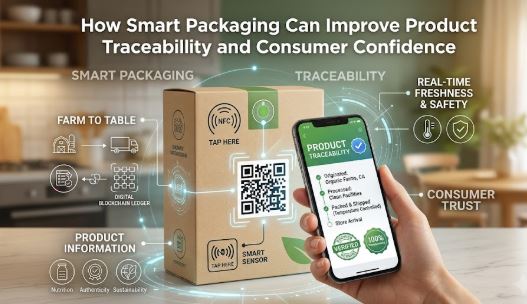
Smart packaging is becoming an important business tool as consumers seek greater transparency about product quality, safety and origin. By connecting physical packaging with digital information, businesses can help customers verify product details while improving visibility across manufacturing, storage and distribution. From food and beverages to pharmaceuticals and consumer goods, smart packaging offers opportunities to reduce supply chain risks, prevent product losses and strengthen brand credibility. As competition increases, companies that invest in reliable product traceability and transparent communication can gain an advantage by making it easier for customers to trust what they buy.
How Smart Packaging Improves Product Traceability
Traditional packaging displays essential details such as ingredients, batch numbers and expiry dates. Smart packaging extends this information through technologies such as QR codes, radio-frequency identification (RFID) tags and near-field communication (NFC) labels.
These technologies can connect products or batches to digital records, helping businesses track goods as they move from production facilities to warehouses, distributors and retail outlets. When the information is accurate and regularly updated, companies can identify a product’s origin, review its handling history and respond more efficiently to quality concerns.
Better traceability is particularly valuable for businesses managing large inventories or complex supply chains. It can reduce the time required to locate affected batches, support stock management and improve coordination between suppliers and retailers.
Real-Time Monitoring Helps Protect Product Quality
Product quality can be affected by temperature, humidity and handling conditions during transportation and storage. Smart packaging can help businesses monitor these factors and identify potential risks before goods reach consumers.
Sensors and time-temperature indicators can provide information about environmental exposure, particularly for perishable food and temperature-sensitive pharmaceutical products. Connected monitoring systems may also alert supply chain teams when conditions move outside specified limits.
This information helps businesses investigate potential quality issues, reduce avoidable spoilage and make more informed decisions about product handling. However, monitoring capabilities vary. Some packaging technologies show changes in product conditions, while others record data that must be retrieved separately.
Choosing the right solution depends on product sensitivity, operating costs and the level of monitoring required.
Smart Labels Help Verify Product Authenticity
Product counterfeiting can damage brand reputation, reduce customer confidence and create safety risks. Smart packaging can help businesses strengthen authentication by connecting labels to digital verification systems.
QR codes and NFC-enabled labels can direct consumers to product information, authorised distribution details or authentication services. More advanced solutions can use unique identifiers and secure digital records to make unauthorised duplication easier to detect.
These features can be valuable in sectors where product authenticity is a major concern. They also give businesses another way to communicate directly with customers and protect their brand identity.
However, a QR code alone does not prove that a product is genuine because codes can be copied. Reliable authentication requires secure identifiers, trustworthy records and systems designed to detect suspicious activity.
Digital Product Information Builds Consumer Confidence
Consumer confidence often depends on how easily people can access accurate information about the products they purchase. Smart packaging can make details about ingredients, sourcing, certifications, handling and usage available through a digital interface.
This additional information can help consumers make more informed decisions without overcrowding physical labels. It also gives businesses an opportunity to explain product features, communicate quality standards and respond to customer questions.
For brands, the benefits extend beyond the initial purchase. Digital packaging can support customer feedback, product education and after-sales communication, helping businesses develop stronger relationships with their audiences.
Transparency must remain central to this approach. If digital information is incomplete, outdated or difficult to access, it can undermine the confidence that smart packaging is intended to build.
Faster Product Recalls and Better Supply Chain Management
Accurate product traceability can help businesses respond more quickly when a safety or quality problem emerges. By connecting packaging identifiers with batch and distribution records, companies can identify potentially affected products and determine where they have been sent.
This can help limit unnecessary product withdrawals, reduce waste and improve communication with distributors and retailers. Faster access to reliable records can also support compliance with applicable product safety and reporting requirements.
Blockchain technology may provide a shared record of supply chain transactions across multiple participants. However, blockchain cannot independently confirm whether information entered into the system is correct. Effective traceability still depends on reliable data collection, secure systems and consistent procedures.
Business Opportunities in Smart Packaging Technology
The adoption of smart packaging is creating opportunities across packaging manufacturing, digital labelling, sensor development, product authentication and supply chain software.
Manufacturers can use these technologies to improve inventory visibility and quality management, while retailers can benefit from better product information and stock control. Technology providers can develop solutions that help businesses connect packaging with digital records without making operations unnecessarily complicated.
Small and medium-sized enterprises can begin with relatively simple options, such as QR codes linked to verified product information and batch records. More advanced sensors and connected monitoring systems can be introduced where the potential benefits justify the investment.
The business case should focus on measurable improvements, including reduced losses, more efficient recalls, stronger product verification and better customer engagement.
Challenges of Smart Packaging Adoption
Despite its advantages, smart packaging can increase production costs and require investment in software, equipment and staff training. Integrating different systems can also be difficult when suppliers, manufacturers and retailers use incompatible technologies.
Businesses must consider data privacy, cybersecurity and the reliability of information shared with customers. Packaging design should preserve the visibility of essential instructions, ingredient details and safety warnings while making digital features easy to use.
Environmental impact is another consideration. Additional electronic components and materials should be assessed for their effects on recyclability and waste management. Selecting the simplest technology that meets a product’s requirements can help businesses balance functionality, affordability and sustainability.
The Future of Smart Packaging
The future of smart packaging will be shaped by growing demand for transparency, stronger product authentication and more efficient supply chains. Digital identifiers, connected sensors and improved data-sharing systems can help businesses understand product movement and communicate quality information more effectively.
As adoption expands, the greatest opportunity will lie in making these technologies practical and cost-effective across different business sizes. Companies that combine reliable traceability with accurate consumer information can strengthen customer confidence while improving operational performance.
Ultimately, smart packaging is more than a packaging upgrade. It is a way to connect products with trustworthy information, helping businesses protect quality, respond to risks and build lasting relationships with consumers.