
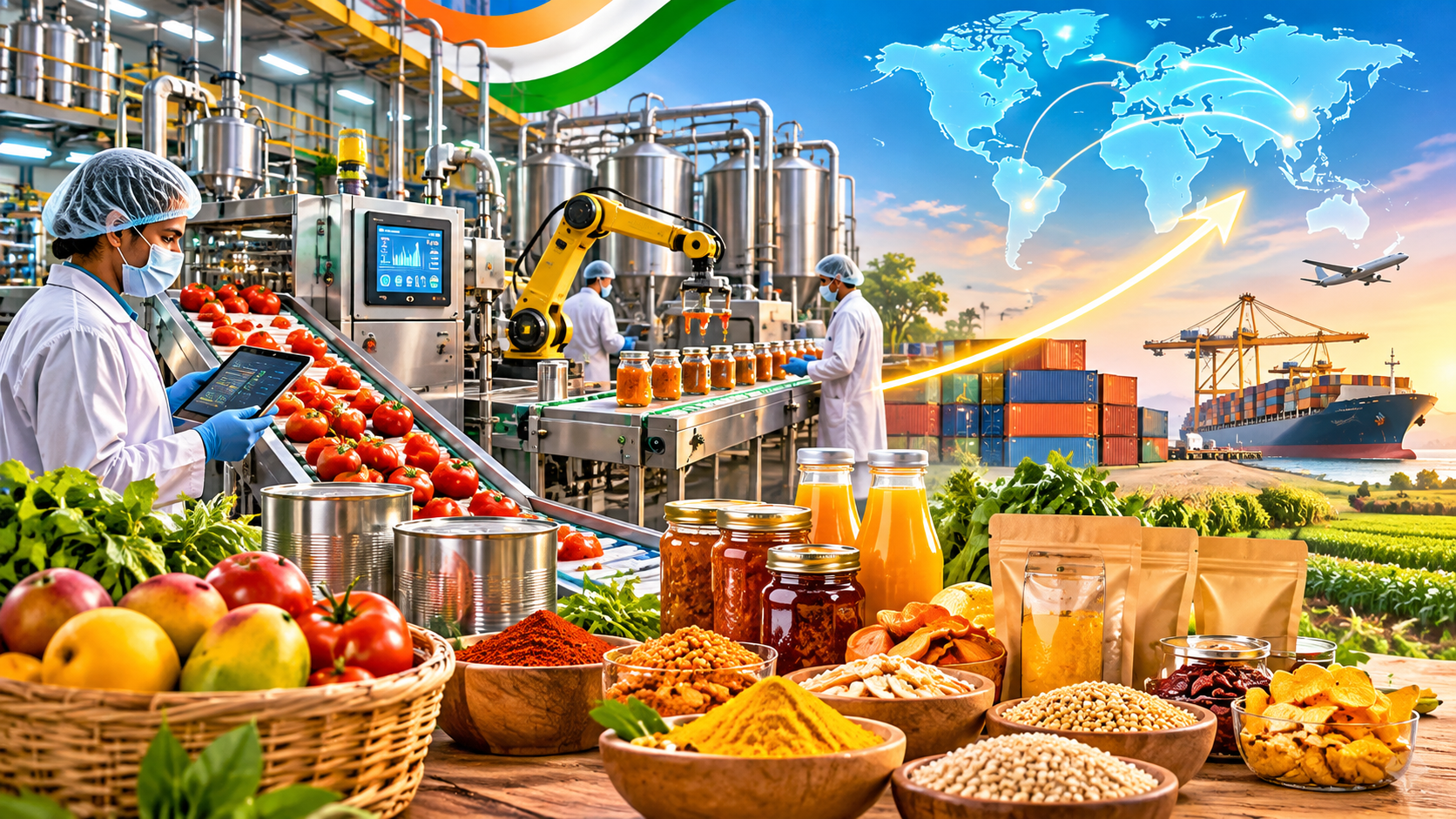
Nov19:India’s food processing industry is rapidly shifting towards technology-driven, value-added manufacturing, supported by rising domestic consumption, changing consumer preferences, growing export demand and government initiatives. This transformation is creating new opportunities for manufacturers to expand production and enter emerging markets.
According to the July 2026 SPURring Growth report, the industry represents an estimated US$600 billion opportunity by 2030. With only around 12–13% of India’s total food output currently processed, significant potential remains for value addition and product innovation.
For manufacturers, investments in advanced processing machinery, automation, smart packaging, cold-chain infrastructure and quality management can improve efficiency, reduce wastage and strengthen export competitiveness.
A Growing Market with Strong Manufacturing Potential
India’s food processing industry is expanding, supported by strong agricultural production, rising consumer demand and the need for convenient, high-quality products. According to IBEF, the market is projected to grow from US$382.24 billion in FY2025 to US$689.02 billion by FY2034. A July 2026 industry report also estimates a US$600 billion opportunity by 2030, highlighting the sector’s growth potential.
The industry’s economic contribution is rising, with Gross Value Added increasing from ₹1.34 lakh crore in 2014–15 to ₹2.24 lakh crore in 2023–24. This growth is creating demand for food processing machinery, industrial refrigeration, automated packaging systems, hygienic equipment, quality-testing facilities and temperature-controlled logistics.
For manufacturers and suppliers, the opportunity extends beyond finished food products to the machinery, technology and infrastructure needed to support large-scale food processing operations.
Technology Is Creating a Competitive Advantage for Manufacturers
Technology is becoming essential to improving productivity, product quality and profitability in food processing. Manufacturers are increasingly adopting automation, artificial intelligence, advanced preservation methods and digital supply-chain systems to reduce wastage, improve consistency and increase production capacity.
Key technologies creating opportunities include:
- Automation and robotics: Streamline sorting, grading, cutting, filling and packaging while reducing manual errors and improving production efficiency.
- AI and machine vision: Support quality inspection, defect detection, demand forecasting and production planning.
- Advanced preservation: Technologies such as IQF, dehydration, pasteurisation, vacuum processing and aseptic processing extend shelf life and support products such as frozen foods, dairy, seafood and ready-to-cook meals.
- Digital supply-chain management: IoT sensors, digital inventory systems and traceability solutions improve monitoring of raw materials, storage and distribution.
- Modern packaging: MAP, vacuum and aseptic packaging help preserve product quality, reduce damage and improve suitability for retail and export markets.
For manufacturers, investing in these technologies can reduce operating costs, strengthen quality control, improve scalability and create a competitive advantage in domestic and international markets.
Changing Consumer Demand Is Creating New Product Opportunities
Changing consumer preferences are creating new opportunities in India’s food processing industry. Urbanisation, rising incomes, busy lifestyles and growing health awareness are increasing demand for convenient, nutritious and premium food products.
Promising manufacturing segments include:
- Ready-to-Eat and Ready-to-Cook Foods: Packaged meals, instant mixes, frozen snacks and regional food products.
- Millet-Based and Nutrition-Focused Products: Millet snacks, breakfast cereals, flour blends and nutritional mixes.
- Fruit and Vegetable Processing: Juices, pulp, purees, frozen vegetables, pickles and dehydrated products.
- Spice and Ingredient Processing: Cleaning, grading, grinding, blending, sterilisation and packaging for domestic and export markets.
- Frozen and Convenience Foods: Frozen vegetables, seafood, meat products and ready-to-cook meals.
- Private-Label and Contract Manufacturing: Supplying products to established brands and retailers through flexible production and packaging facilities.
These segments offer manufacturers opportunities to increase value addition, reduce agricultural wastage and serve growing domestic and international markets.
Export Demand Is Expanding Opportunities for Indian Food Manufacturers
Export demand is creating significant growth opportunities for India’s food processing industry. Indian products such as processed fruits and vegetables, spices, cereal preparations, pulses, confectionery and ready-to-eat foods have demand across international markets.
According to the Ministry of Food Processing Industries, processed food’s share of agricultural exports increased from 13.7% in 2014–15 to 20.4% in 2024–25. APEDA recorded approximately US$8.03 billion in processed food exports in FY2025–26, while the broader agricultural and processed-food export basket reached around US$54.70 billion.
Key opportunities for manufacturers include:
- Export-oriented fruit, vegetable and spice processing.
- Frozen, preserved and ready-to-eat food production.
- Value-added cereal and agricultural products.
- Contract manufacturing for overseas buyers.
- Specialised packaging for international distribution.
However, success in export markets requires consistent product quality, food safety compliance, traceability, reliable delivery and competitive pricing.
Export Compliance and Quality Infrastructure Are Becoming Essential
International food markets impose strict requirements relating to hygiene, product composition, packaging, labelling, contaminants, allergens and traceability.
Manufacturers seeking to develop export businesses must design their production systems around the regulations of their target markets rather than treating compliance as a final-stage requirement.
Important areas of attention include:
- FSSAI licensing and applicable food safety regulations for domestic operations.
- HACCP-based hazard identification and control procedures.
- ISO 22000 food safety management systems.
- BRCGS or other buyer-specific certification requirements, where applicable.
- Codex Alimentarius guidelines and importing-country regulations.
- Product testing, microbiological controls and residue monitoring.
- Batch coding, ingredient traceability and recall procedures.
- Export documentation, packaging specifications and accurate product labelling.
Investment in modern laboratory facilities, metal detection, X-ray inspection, automated cleaning systems and hygienic processing equipment can strengthen manufacturing reliability.
For export-oriented businesses, these investments are directly connected to market access, customer confidence and the ability to secure repeat orders.
Government Policies Are Supporting Industrial Expansion
Government initiatives are supporting the growth of India’s food processing industry through infrastructure development, manufacturing incentives and financial assistance. The Union Budget FY2026–27 allocated ₹4,064 crore to the Ministry of Food Processing Industries.
Key schemes include:
- PLISFPI: With an outlay of ₹10,900 crore, the scheme encourages manufacturing expansion and value addition. By February 2026, 169 applications had been approved, with approximately ₹9,207 crore in investment reported by applicants.
- PMKSY: Supports cold-chain infrastructure, agro-processing clusters and food preservation facilities. A total of 1,256 projects had been completed or were operational by June 2026.
- PMFME: Helps micro food processing enterprises upgrade facilities, improve packaging, access finance and formalise operations.
These schemes can improve investment opportunities for manufacturers, although benefits depend on eligibility, scheme guidelines, application timelines and approved project costs.
Cold-Chain Infrastructure: An Important Area for Investment
The growth of processed food manufacturing depends heavily on efficient storage and transportation infrastructure. Perishable agricultural products can lose quality and commercial value when exposed to inappropriate temperatures, delays and poor handling conditions.
Cold-chain infrastructure is therefore essential for manufacturers working with fruits, vegetables, dairy products, seafood, meat and frozen food categories.
Investment opportunities include:
- Pre-cooling and refrigerated storage facilities.
- Industrial refrigeration and blast-freezing systems.
- IQF processing lines.
- Refrigerated transportation and distribution networks.
- Controlled-atmosphere storage.
- Temperature monitoring and automated warehouse management.
- Integrated processing and preservation facilities near agricultural production centres.
For manufacturers, a well-designed cold chain can reduce raw material deterioration, improve production planning, extend market reach and support export-oriented operations.
Businesses should evaluate cold-chain investments based on product shelf life, procurement volumes, energy consumption, storage utilisation and transportation costs. Efficient capacity utilisation is essential because refrigeration and cold storage involve substantial fixed and operating expenses.
Digital Commerce Is Changing the Route to Market
The growth of e-commerce, online grocery platforms and quick-commerce distribution is changing how processed food products reach consumers.
Digital channels can provide manufacturers with faster access to consumer feedback, regional demand information and emerging product preferences. They also create opportunities for smaller manufacturers to test products and expand distribution without immediately establishing extensive physical retail networks.
However, digital distribution requires manufacturers to reconsider packaging formats, product shelf life, order fulfilment, inventory management and delivery economics.
For businesses entering this segment, commercial priorities should include:
- Developing products suitable for smaller household consumption patterns.
- Using packaging that can withstand storage and last-mile transportation.
- Maintaining consistent inventory availability.
- Monitoring product-level sales and repeat-purchase behaviour.
- Calculating platform commissions, fulfilment expenses and promotional costs.
- Ensuring that product pricing supports sustainable contribution margins.
Digital distribution can accelerate market access, but sales growth does not automatically translate into profitability. Manufacturers must assess channel economics before scaling production.
Regional Manufacturing Clusters Offer Additional Opportunities
Regional agricultural strengths create opportunities to develop food processing hubs beyond major industrial centres. Odisha and eastern India have potential in rice products, millet processing, seafood, cashew, spices, fruit pulp and dehydration.
Key investment opportunities include:
- Modern rice milling and value-added rice products.
- Millet-based snacks and packaged foods.
- Seafood processing, freezing and export preparation.
- Cashew grading, roasting and packaging.
- Mango pulp, fruit processing and dehydration.
- Spice processing and packaging.
- Cold storage and agricultural preservation facilities.
Locating facilities near raw material sources can reduce transportation costs, strengthen local supply chains and create value for farmers, equipment suppliers and logistics businesses. Investors should assess seasonal availability, utilities, skilled labour, connectivity and access to target markets before establishing operations.
Business Challenges and Investment Risks
Despite the positive growth outlook, food processing remains a capital-intensive and operationally demanding industry. Manufacturers must address several challenges before committing to large-scale investments.
Key challenges in India’s food processing industry include:
- Raw Material Availability: Seasonal production, weather conditions and price fluctuations can affect supply and production costs.
- High Investment Costs: Modern machinery, refrigeration, packaging systems, energy and maintenance require significant capital.
- Fragmented Supply Chains: Inconsistent raw material quality and scattered procurement make production planning difficult.
- Food Safety and Compliance: Manufacturers must meet quality, hygiene, traceability and regulatory requirements to avoid product rejection and market restrictions.
- Competition and Pricing Pressure: Businesses must focus on product innovation, quality, efficiency and reliable supply to remain competitive rather than competing only on price.
Building a Profitable and Future-Ready Manufacturing Business
Manufacturers should evaluate the following factors before investing in or expanding a food processing business:
- Product-Market Fit: Identify products with strong demand and clear competitive advantages.
- Raw Material Economics: Assess availability, seasonal pricing and procurement costs.
- Processing Technology: Choose suitable machinery based on product requirements and production capacity.
- Unit Economics: Calculate raw material, labour, energy, packaging, logistics and financing costs.
- Quality Infrastructure: Ensure food safety, testing, traceability and export compliance.
- Distribution Strategy: Identify domestic, retail, online and export markets.
- Financial Planning: Evaluate capital investment, working capital, break-even points and returns.
- Scalability: Design facilities that can support future production expansion.
A strong business plan built around these factors can help manufacturers manage risks, improve profitability and achieve sustainable growth.
Conclusion
India’s food processing industry is moving towards technology-driven, value-added and export-oriented manufacturing, creating opportunities through rising domestic consumption, international demand and infrastructure investment. The projected US$600 billion opportunity by 2030 highlights its growth potential, with success depending on efficient processing, modern technology, product innovation, strong supply chains, cost management and international quality standards. Manufacturers that invest in the right capabilities can create sustainable businesses while adding value to agricultural produce and strengthening India’s position in global food markets.