
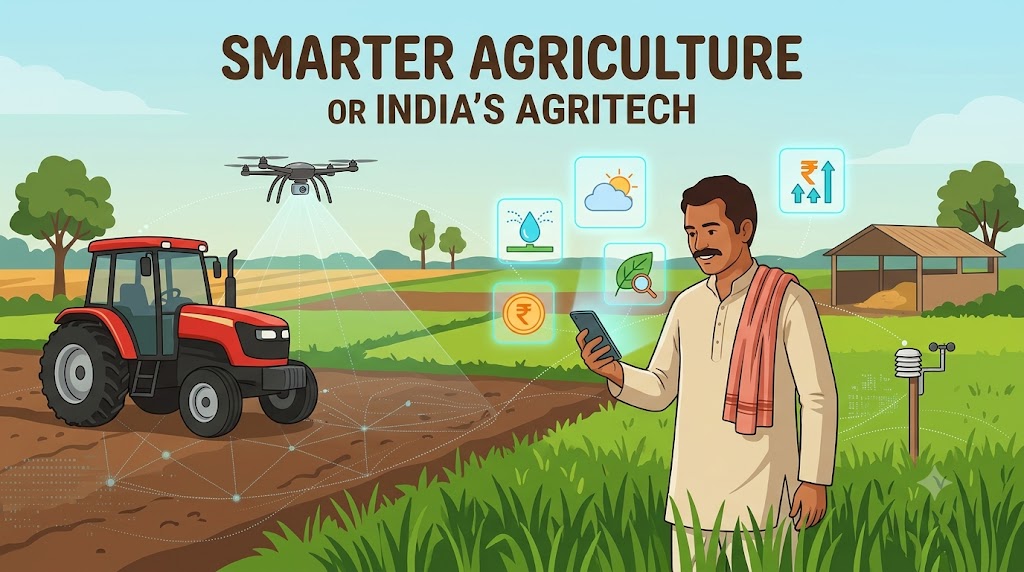
Agriculture in India is entering a period of gradual change. Farmers continue to depend on their experience and knowledge of local conditions, but rising input costs, unpredictable weather and changing market prices are making farming more difficult to manage. At the same time, digital technology is creating new ways to improve farm operations, reduce waste and connect producers with buyers.
This is where India’s agritech sector is gaining importance. By combining agricultural knowledge with data, digital platforms and modern equipment, agritech businesses are helping farmers make better-informed decisions. The opportunity extends beyond crop production to storage, transportation, agricultural finance and market access.
For a country where farming supports millions of livelihoods, smarter agriculture is not simply about adopting new technology. It is about making farming more productive, financially sustainable and better prepared for changing economic and environmental conditions.
India’s Agritech Sector Expands Beyond Traditional Farming
India’s agritech ecosystem includes startups, technology providers, agricultural institutions, equipment suppliers and businesses working across the farm-to-market value chain. Their services range from digital crop advisory and soil analysis to machinery rental, online trading and supply-chain management.
The sector’s growth reflects the need to address long-standing challenges in agriculture. Many farmers operate small plots of land and have limited resources to invest in expensive machinery or advanced technology. Agritech services can help bridge this gap by offering affordable tools, shared equipment and information that would otherwise be difficult to access.
For businesses, this creates opportunities to develop solutions tailored to specific crops, regions and farming practices. However, success depends on whether these services are affordable, easy to use and capable of delivering measurable benefits to farmers.
Precision Farming Helps Farmers Use Resources Wisely
One of the most promising developments in agritech is precision farming. Instead of applying the same amount of water, fertiliser or crop protection products across an entire field, farmers can use data to make more targeted decisions.
Soil testing, weather forecasts, sensors, satellite imagery and drone-based monitoring can help identify crop stress, irrigation requirements and potential pest problems. This information allows farmers to respond more precisely to changing field conditions.
Better resource management can reduce unnecessary input use and improve farm efficiency. It can also help farmers identify problems earlier, potentially limiting crop damage and avoidable expenses.
However, the benefits vary according to crop type, local conditions, technology costs and the quality of available data. For small farmers, affordable services and practical guidance are often more useful than expensive systems requiring significant technical expertise.
Digital Marketplaces Improve Access to Buyers
Selling agricultural produce at a fair price remains a major concern for farmers. Limited market information, transportation difficulties, storage shortages and dependence on local trading networks can affect their bargaining power.
Digital agricultural marketplaces are helping improve access to price information and potential buyers. These platforms can connect farmers with traders, retailers, processors and institutional customers, creating more opportunities to compare offers and plan sales.
Technology can also improve coordination across the supply chain. Better information about demand, transport and delivery schedules can help reduce delays and prevent some produce from spoiling before it reaches the market.
Still, digital access alone cannot guarantee higher earnings. Farmers also need reliable buyers, transparent weighing and grading, timely payments and suitable storage and transport facilities. Strong physical infrastructure remains essential to making digital market connections work.
Artificial Intelligence and Smart Irrigation Support Better Decisions
Artificial intelligence is creating new possibilities for agricultural planning. By analysing weather patterns, crop observations and other farm data, digital tools can provide guidance on irrigation, planting schedules and potential pest risks.
Smart irrigation systems can help farmers use water more efficiently by responding to soil moisture and crop requirements. Weather-based alerts can also support decisions when rainfall is uncertain or temperatures become extreme.
These tools are particularly relevant as farmers face increasing pressure from climate variability and water scarcity in many regions. Better information can help them prepare for risks, although technology cannot eliminate the uncertainty associated with weather and crop production.
Local knowledge remains important. The most useful systems combine digital recommendations with farmers’ experience and advice from agricultural specialists.
Agritech Creates New Opportunities for Rural Businesses
The growth of smart farming is creating business opportunities beyond the sale of agricultural technology. Equipment rental, drone services, soil testing, crop monitoring, digital advisory and farm logistics can all become sources of income for rural entrepreneurs.
Shared machinery services are especially relevant for smallholders who may not be able to justify the cost of purchasing equipment independently. Renting machinery when needed can make modern tools more accessible while allowing service providers to earn revenue from equipment use.
Farmer Producer Organisations can also benefit from digital systems that support collective purchasing, inventory management, quality control and bulk marketing. By coordinating the activities of multiple farmers, these organisations may improve access to buyers and strengthen their negotiating position.
For agritech companies, recurring service models can create more stable revenue, provided the services solve genuine problems and offer clear value to their customers.
Digital Finance Can Strengthen Agricultural Access
Access to affordable credit and insurance remains important for farmers who need to purchase inputs, maintain equipment or manage unexpected losses. Digital platforms can help simplify applications, improve access to relevant information and connect farmers with financial service providers.
Government-backed digital agricultural initiatives and online trading systems are also intended to improve information sharing and access to services. When reliable records are available and farmers can navigate the systems effectively, digital processes may reduce some administrative barriers.
However, digitalisation must be supported by appropriate safeguards. Farmers need clear information about loan conditions, insurance coverage and data use. Access to technology should not become a barrier for people with limited internet connectivity, digital literacy or formal documentation.
Challenges That Agritech Businesses Must Address
Despite its potential, agritech faces several practical challenges. Small landholdings, varying regional conditions and limited digital infrastructure can make it difficult to deliver the same solution across different farming communities.
Technology costs and uncertain returns may also discourage adoption. Farmers are more likely to continue using a service when they can see how it saves money, reduces risk or improves access to markets.
Agritech businesses must therefore focus on local-language support, simple user experiences and pricing models suited to agricultural income cycles. Partnerships with agricultural institutions, cooperatives and local organisations can help build trust and improve adoption.
The long-term success of the sector will depend less on the number of digital tools available and more on how effectively those tools address everyday farming problems.
Conclusion
India’s agritech sector has the potential to reshape agriculture by bringing better information, more efficient resource use and stronger market connections to farming communities. From precision irrigation and digital crop advisory to machinery rental and supply-chain management, technology can help farmers make more informed decisions and improve operational efficiency.
However, lasting progress requires more than innovation alone. Affordable services, dependable infrastructure, practical training and fair access to markets are essential if the benefits are to reach small and marginal farmers.
For businesses, the opportunity lies in developing solutions that fit the realities of Indian agriculture and deliver tangible value over time. When technology helps farmers manage costs, protect crops and connect with buyers more effectively, smarter farming can support stronger rural enterprises and a more resilient agricultural economy.