
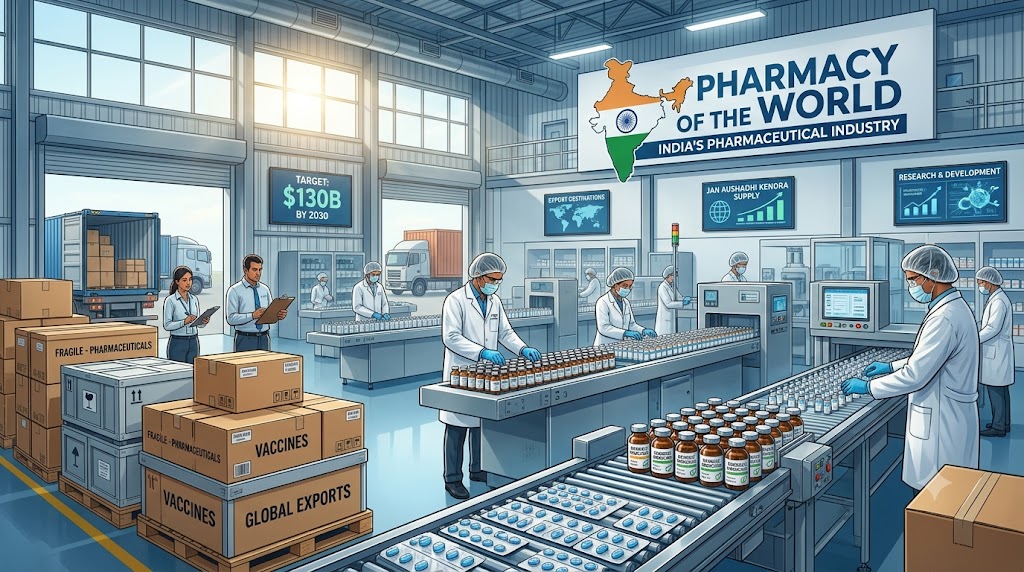
India’s pharmaceutical industry has become a vital part of the global healthcare system by supplying affordable medicines, vaccines and essential treatments to millions of people. Known as the “Pharmacy of the World”, India has built its reputation on large-scale manufacturing, competitive pricing and a strong presence in the global generic medicine market.
Today, the industry is entering a new phase of growth. Rising healthcare needs, demand for cost-effective treatments and investment in domestic manufacturing are creating opportunities for pharmaceutical companies, biotechnology firms and healthcare businesses. At the same time, patients and healthcare providers continue to seek medicines that are both affordable and reliable.
India’s pharmaceutical market is valued at approximately $60 billion, with a long-term industry ambition to reach $130 billion by 2030. However, achieving that target will depend on export conditions, manufacturing competitiveness and the industry’s ability to move into higher-value products. The opportunity is substantial, but sustained growth will require more than increasing production volumes.
Generic Medicines Drive Affordable Healthcare
Generic medicines remain one of India’s strongest contributions to global healthcare. The country supplies around 20% of the world’s generic medicines, helping healthcare systems access lower-cost alternatives to many established treatments.
For patients, affordable medicines can make a significant difference to household finances, particularly when managing chronic conditions such as diabetes, hypertension and heart disease. Lower treatment costs can also help public healthcare programmes serve more people within limited budgets.
For pharmaceutical businesses, generic drug production offers opportunities to expand manufacturing, strengthen distribution networks and enter international markets. However, competition is intense, and companies must maintain product quality while controlling production costs.
The next stage of growth will depend on ensuring that affordable medicines are consistently available and meet the necessary safety and quality standards. Lower prices create value only when patients can access dependable treatments.
Government Initiatives Support Wider Access
Affordable healthcare also depends on how effectively medicines reach patients. Government programmes are helping expand access to lower-cost treatments, including through the Pradhan Mantri Bhartiya Janaushadhi Pariyojana.
By February 2026, more than 18,646 Jan Aushadhi Kendras were operational across India. These outlets provide a range of generic medicines and medical products at affordable prices, creating an alternative for consumers who may otherwise face higher medicine bills.
The programme also creates opportunities for pharmacy operators, distributors and suppliers. Its wider economic value lies in connecting affordable products with communities that need them.
For the pharmaceutical industry, stronger distribution networks and partnerships with healthcare providers can help improve market access. In underserved areas, better availability must go hand in hand with medical guidance, reliable supplies and awareness of treatment options.
Domestic Manufacturing Creates Business Opportunities
India’s pharmaceutical industry has developed extensive manufacturing capabilities, but dependence on imported raw materials for certain medicines remains a concern. Active pharmaceutical ingredients, or APIs, are essential components used in drug production.
Expanding domestic API manufacturing can strengthen supply chains, reduce exposure to international disruptions and create opportunities for chemical manufacturers, equipment suppliers and logistics businesses.
Government incentives and production-linked initiatives are encouraging investment in pharmaceutical manufacturing and selected critical ingredients. These measures can help companies build capacity and improve the availability of essential products.
However, manufacturing growth requires sustained investment in technology, skilled workers, energy efficiency and quality control. Businesses that combine cost-effective production with dependable quality will be better positioned to compete in both domestic and export markets.
Biotechnology Opens a New Growth Avenue
India’s pharmaceutical industry is gradually moving beyond conventional generics towards complex medicines, biologics and biosimilars. These products offer opportunities to develop more specialised treatments and build higher-value manufacturing capabilities.
Biosimilars are highly similar versions of approved biological medicines and can offer more affordable alternatives when developed and approved under the relevant regulatory requirements.
The proposed ₹10,000 crore BioPharma SHAKTI initiative announced in the Union Budget 2026–27 signals a policy focus on strengthening India’s biopharmaceutical ecosystem, including research and development and clinical research capabilities.
For businesses, this creates potential opportunities in advanced manufacturing, laboratory services, clinical research and scientific partnerships. Yet the segment requires significant capital, technical expertise and rigorous testing. Commercial success will depend on developing products that meet patient needs while remaining economically viable.
Exports and Innovation Shape Future Growth
India’s pharmaceutical exports reached approximately $30.5 billion in FY2024–25, reflecting the country’s established position in international medicine supply chains.
Exports create business opportunities for manufacturers, packaging companies, testing laboratories and logistics providers. They also bring challenges, including differing regulatory requirements, pricing pressures and changing international trade conditions.
The industry is therefore looking beyond traditional generic medicines towards complex formulations, biosimilars, research services and innovative treatments. These areas can help companies diversify revenue and compete on scientific capability rather than price alone.
The transition will require investment in research, skilled talent, modern facilities and regulatory expertise. Companies that develop strong capabilities in these areas can create opportunities for long-term growth, although research-led products often involve greater costs and longer development timelines.
Quality Remains Central to Growth
Affordable medicines must also be safe, effective and consistently manufactured. Pharmaceutical companies need robust quality-control systems, reliable testing and compliance with the regulations of the markets they serve.
Meeting international standards can help manufacturers protect their reputation and maintain access to export markets. Conversely, quality failures can result in product recalls, regulatory action and damage to customer confidence.
For businesses, investment in quality assurance should be treated as a core operating requirement rather than an additional expense. Strong manufacturing practices can improve consistency, reduce avoidable losses and support lasting relationships with healthcare providers.
Challenges Facing the Pharmaceutical Industry
Despite its strengths, India’s pharmaceutical sector faces several commercial challenges. Intense price competition can narrow profit margins, while fluctuating raw material costs and supply-chain disruptions can increase operating expenses.
Export businesses must also navigate regulatory changes, trade uncertainty and rising logistics costs. These pressures can make long-term investment decisions more difficult, particularly for smaller manufacturers.
Another challenge is balancing affordability with sustainable business returns. Companies need sufficient revenue to maintain quality, invest in research and ensure dependable supplies without making essential treatments unaffordable.
Improving manufacturing efficiency, diversifying export markets and strengthening domestic supply chains will be important to managing these risks.
Affordable Healthcare Can Drive Long-Term Growth
India’s pharmaceutical industry has an opportunity to combine its manufacturing strengths with innovation and wider access to treatment. Generic medicines can continue to support affordability, while biotechnology, domestic API production and advanced research can open new areas of investment.
For businesses, the priority is to maintain quality, manage costs and develop products that respond to changing healthcare needs. For policymakers, reliable manufacturing, research support and accessible distribution will remain important to the industry’s development.
Ultimately, the success of India’s pharmaceutical industry should be measured not only by market size or export earnings but also by its ability to deliver safe and affordable medicines to patients. By combining commercial discipline with a commitment to accessible healthcare, India can strengthen its global position and create lasting economic opportunities.