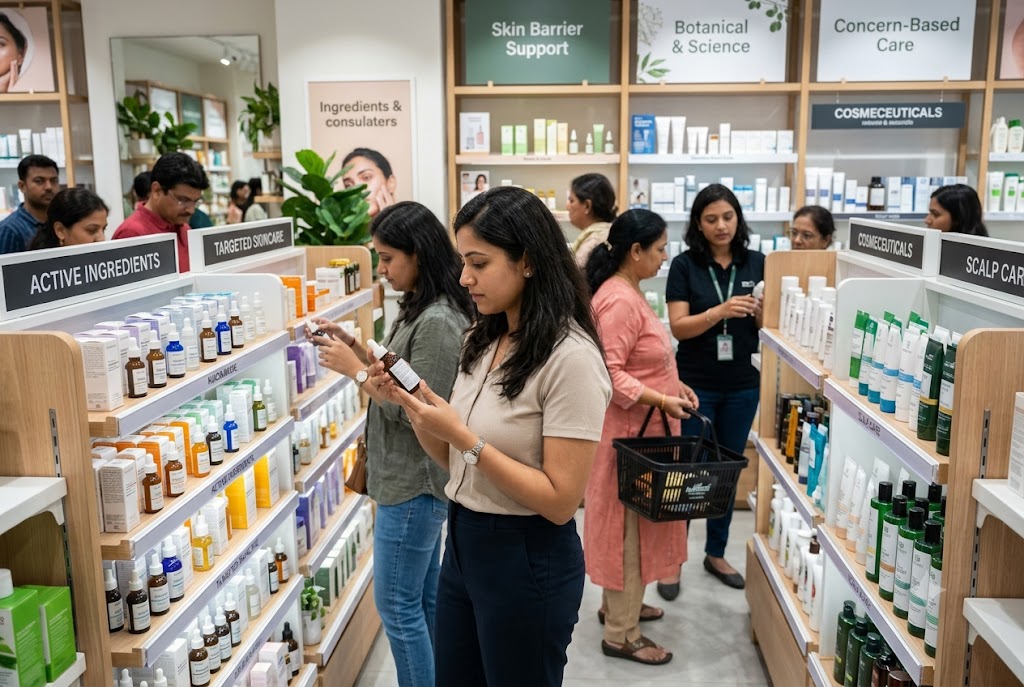
India’s beauty industry is entering a new phase as consumers become more conscious of what goes into their skincare and haircare products. Instead of relying only on familiar brands, attractive packaging or celebrity endorsements, shoppers are increasingly looking for ingredients that address specific concerns, from acne and pigmentation to dryness, sensitive skin and hair fall.
This shift towards ingredient-led purchasing is changing how beauty products are developed, marketed and sold. Ingredients such as niacinamide, hyaluronic acid, vitamin C, retinoids and ceramides are gaining attention as consumers seek more targeted solutions and clearer information about product performance.
For businesses, the change represents both an opportunity and a challenge. While growing interest in science-backed skincare is opening new avenues for innovation, brands must work harder to earn consumer trust through product quality, transparent communication and realistic claims.
India’s Beauty Market Moves Beyond Traditional Branding
Beauty shopping in India was once driven largely by brand familiarity, aspirational advertising and broad promises of glowing skin or healthy hair. These factors still matter, but consumers are increasingly interested in understanding whether a product suits their individual needs.
Someone dealing with acne may look for a different formulation from someone concerned about dryness or an uneven skin tone. Similarly, consumers experiencing hair breakage or scalp problems are showing greater interest in specialised haircare rather than relying entirely on conventional shampoos and oils.
This change is encouraging companies to move away from one-size-fits-all marketing. Products are increasingly being positioned around specific concerns, making ingredient information and clear usage instructions important parts of the buying experience.
For beauty businesses, the message is straightforward: attracting attention is only the first step. Building customer loyalty depends on delivering a product that meets reasonable expectations and offers a consistent experience.
Active Ingredients Create New Opportunities for Skincare Brands
Ingredient-led skincare has become an important area of product development, with consumers showing greater interest in serums, moisturisers, exfoliants and products designed to support the skin barrier.
Niacinamide is commonly used in formulations targeting uneven skin tone and skin-barrier support. Hyaluronic acid helps the skin retain moisture, while vitamin C is widely used in products designed to improve the appearance of dullness and pigmentation. Retinoids are associated with acne management and signs of ageing, although their use requires care and may not be suitable for everyone.
Ceramides are also attracting attention because of their role in maintaining the skin barrier, while peptides feature in products focused on skin conditioning and the appearance of ageing.
However, simply adding a popular ingredient to a formulation does not guarantee results. Performance depends on several factors, including concentration, formulation quality, product stability and suitability for the intended user.
This creates an opportunity for brands to stand out through more than ingredient-focused advertising. Companies that explain how their products work, how they should be used and what consumers can realistically expect are better placed to build lasting credibility.
Cosmeceuticals Expand the Market for Targeted Beauty Products
The growing interest in specialised skincare has brought greater attention to cosmeceuticals and dermocosmetics, categories commonly associated with products developed around particular skin and hair concerns.
These products typically focus on needs such as acne-prone skin, dryness, sensitivity, uneven pigmentation and scalp care. Their appeal lies in the promise of a more targeted approach to everyday beauty and personal care.
Industry estimates provided in the source material place India’s cosmeceuticals market at more than ₹19,000 crore in 2025, compared with approximately ₹10,400 crore in 2022. Although estimates can vary depending on market definitions and research methods, the figures indicate the scale of the opportunity described in the material.
For businesses, this demand creates room for specialised product ranges, new formulations and stronger customer relationships. Haircare is another promising area, as shoppers pay more attention to scalp health, hair breakage, thinning and hair fall.
At the same time, brands must distinguish between marketing language and established evidence. A product described as a cosmeceutical is not automatically proven to treat a medical condition. Responsible claims and appropriate testing remain essential.
Digital-First Brands Change the Beauty Business
Online shopping has helped ingredient-focused beauty products reach consumers who want to compare formulations, read reviews and understand product benefits before making a purchase.
Direct-to-consumer brands have particularly benefited from this shift. By selling through their own websites, online marketplaces and social commerce channels, smaller businesses can communicate directly with customers without depending entirely on traditional retail networks.
Digital platforms also allow companies to explain ingredients, publish skincare guides and respond to consumer questions. This can help emerging brands compete with established players that have greater advertising budgets and wider physical distribution.
However, online visibility does not automatically translate into sustainable profits. Customer acquisition costs, discounts, competition and quality-control expenses can put pressure on margins. Brands must also convert first-time buyers into repeat customers.
For long-term growth, businesses need a clear value proposition supported by reliable formulations, responsive customer service and products that justify their price.
Social Media Makes Beauty Education a Commercial Force
Social media has changed how consumers discover beauty products. Discussions about active ingredients, skin-barrier health, exfoliation and skincare routines have made technical information more accessible to a wider audience.
Beauty creators and skincare educators can help shoppers understand product labels and compare formulations. For brands, these platforms offer an opportunity to explain products in greater detail and build relationships with potential customers.
But the growing volume of online advice also creates risks. Trending ingredients may be unsuitable for some skin types, while complicated routines and exaggerated product claims can lead consumers to make poor choices.
This makes responsible communication increasingly important. Brands that provide clear instructions, avoid unrealistic promises and encourage professional advice when necessary can differentiate themselves in a crowded market.
The commercial opportunity is not simply to make a product popular. It is to help customers make informed decisions and develop confidence in the brand.
Ayurveda and Modern Skincare Find Common Ground
Traditional beauty practices remain relevant in India, where botanical ingredients and familiar home-care traditions continue to influence purchasing decisions. Increasingly, some products combine this heritage with modern formulation techniques and more detailed information about ingredients.
This approach can appeal to consumers who value traditional ingredients but also want convenience, consistency and clarity about product performance.
The opportunity extends across skincare, body care and haircare. Businesses can strengthen their positioning by explaining ingredient sourcing, formulation choices and product suitability rather than relying exclusively on natural or traditional imagery.
However, natural ingredients are not automatically safer or more effective than synthetic alternatives. Plant-derived ingredients can also cause irritation or allergic reactions, and their performance depends on formulation and quality.
For beauty companies, combining traditional appeal with appropriate testing and transparent communication offers a more credible route to differentiation.
E-Commerce and Quick Commerce Reshape Beauty Shopping
The expansion of digital retail is making beauty products easier to discover, compare and replenish. Online marketplaces give consumers access to ingredient lists, product descriptions and reviews, while quick-commerce services offer faster delivery of selected everyday essentials in supported locations.
These channels serve different purchasing needs. Consumers researching a specialised serum may value detailed product information and comparisons, while someone running out of a cleanser or moisturiser may prioritise convenience.
For retailers and brands, the challenge is to choose distribution channels that make commercial sense. Quick delivery can improve the shopping experience, but platform fees, promotional costs and inventory management can affect profitability.
An effective strategy requires businesses to balance convenience, availability, pricing and customer retention. Reaching consumers quickly is valuable, but sustainable growth depends on more than delivery speed.
Beauty and Pharmaceutical Businesses Find New Growth Avenues
The demand for targeted skincare is creating opportunities for established personal care companies and pharmaceutical businesses with relevant formulation and quality-control capabilities.
Companies can explore specialised product ranges, strengthen their distribution networks and respond to consumers seeking products designed for particular skin and hair concerns.
At the same time, competition is becoming more demanding. Emerging brands must differentiate themselves through product quality, pricing and customer engagement, while established players need to innovate without losing the trust associated with their existing products.
Success requires more than adopting clinical-looking packaging or using scientific terminology in advertising. Businesses need to understand their target audience, comply with applicable requirements and ensure that product claims are supported by suitable evidence.
What the Shift Means for India’s Beauty Industry
Ingredient-led purchasing is changing the priorities of India’s beauty businesses. Branding, packaging and celebrity visibility remain important, but consumers are increasingly looking for clear information, suitable formulations and credible explanations of product benefits.
For emerging companies, the opportunity lies in identifying specific consumer needs and developing products that address them responsibly. Established brands can strengthen their position by improving formulations, expanding specialised ranges and making product information easier to understand.
Retailers and digital platforms also have a role to play by helping shoppers compare products and distinguish meaningful product information from exaggerated marketing claims.
The industry’s future growth will depend not only on new product launches but also on quality, customer satisfaction and the ability to encourage repeat purchases.
Conclusion: Consumer Trust Will Shape the Future of Beauty
India’s beauty market is moving towards a more informed and concern-focused model of purchasing. Consumers increasingly want products suited to their needs, ingredients they can understand and claims that do not promise more than a formulation can deliver.
This transition is creating opportunities in targeted skincare, functional haircare, cosmeceuticals, digital-first beauty brands and modern botanical formulations. It is also raising expectations across the industry, making product quality, transparency and responsible marketing central to competition.
For businesses, ingredient-led beauty is more than a passing trend. It is a change in how consumers evaluate value and decide which brands deserve their loyalty. Companies that combine thoughtful product development with honest communication and convenient access will be better positioned to compete as India’s beauty industry evolves.