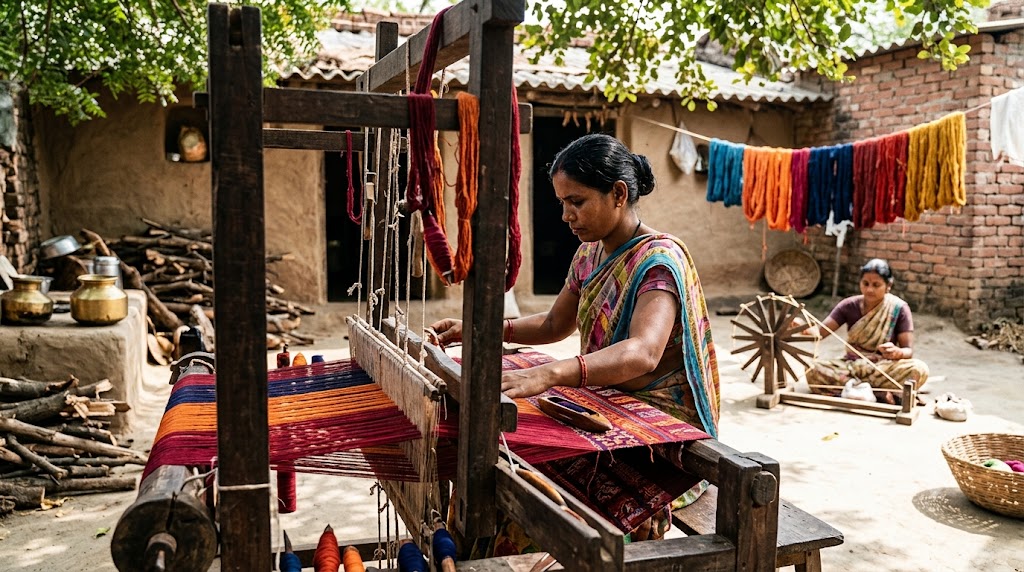
India’s handloom industry represents far more than the country’s textile heritage. Behind every woven sari, cotton stole and intricately patterned fabric is a network of skilled artisans whose livelihoods depend on traditional knowledge passed down through generations. Today, this centuries-old industry is also navigating a changing business environment shaped by online shopping, sustainability concerns, evolving fashion preferences and competition from mass-produced textiles.
The sector remains an important source of employment, particularly in rural and semi-urban communities. It supports weaving, dyeing, spinning, finishing and other related activities, creating income opportunities for families that may have limited access to formal employment. According to figures commonly cited in government handloom-sector publications, around 35 lakh people are engaged in weaving and allied activities, with women accounting for a substantial share of the workforce.
However, the industry faces a difficult challenge. While consumers increasingly value handmade products and regional craftsmanship, many weavers continue to struggle with irregular orders, rising raw-material costs and limited bargaining power. Ensuring that the people who create these products benefit from growing market demand will be central to the sector’s future.
A Major Source of Rural Employment and Women’s Livelihoods
Handloom weaving plays a significant role in supporting household incomes across India. Unlike large textile factories, many handloom operations function through household-based production, small workshops and artisan clusters. This structure allows weaving to remain closely connected to local communities and regional skills.
Women play an especially important role in the sector, contributing to weaving as well as preparatory work, yarn handling, finishing and other stages of production. For many households, these activities provide an opportunity to earn without moving away from their villages. Yet the income generated is not always steady, and the division of work can leave some artisans with limited recognition or financial independence.
Strengthening this workforce requires more than preserving traditional designs. Access to better equipment, training, affordable credit and direct market connections can help artisans improve productivity and secure more reliable earnings.
India’s Regional Weaving Traditions Offer Distinct Market Value
One of the strongest advantages of India’s handloom industry is its diversity. Different regions have developed distinctive weaving techniques, materials and patterns, giving buyers a wide range of products with identifiable cultural roots.
Banarasi silk from Uttar Pradesh is associated with elaborate designs and ceremonial wear. Kanchipuram silk from Tamil Nadu is valued for its rich silk fabric and traditional borders. Pochampally Ikat from Telangana is recognised for its distinctive patterns created through resist-dyed yarns. Chanderi textiles from Madhya Pradesh are known for their lightweight feel, while Sambalpuri textiles from Odisha are celebrated for their traditional motifs and tie-dye techniques.
Several of these textile traditions have received Geographical Indication (GI) recognition, which helps identify products linked to a particular place and its established craftsmanship. Such recognition can strengthen regional identity, although it does not automatically guarantee higher earnings for the artisans who produce the textiles.
For businesses, these regional identities offer opportunities to develop products around craftsmanship, authenticity and cultural storytelling. For consumers, they provide a way to understand where a textile comes from and the skills involved in making it.
Sustainable Fashion Creates New Opportunities
As conversations around textile waste, excessive consumption and the environmental impact of clothing gain attention, handloom products have an opportunity to reach consumers looking for alternatives to standardised mass-produced fashion.
Many handloom products are made in small batches and can involve relatively low-energy production methods compared with some power-intensive manufacturing processes. However, the environmental impact varies according to the yarn, dyes, water use, finishing methods and transportation involved. Handmade production alone does not automatically make a textile sustainable.
The industry can strengthen its position by adopting responsible dyeing practices, improving waste management, using traceable materials where feasible and providing clear information about production methods. Natural fibres and durable designs can also appeal to buyers who prioritise longevity over frequent replacement.
The challenge is to make these products accessible to a wider market. If handloom is positioned only as a premium or occasional purchase, its customer base may remain limited. Everyday clothing, home furnishings, scarves, table linen and contemporary accessories can help expand demand beyond traditional festive and wedding purchases.
E-Commerce Is Changing How Weavers Reach Customers
Digital platforms have created new ways for artisans and small businesses to sell beyond local markets. Social media, online marketplaces and direct-to-consumer websites allow sellers to showcase regional products, explain weaving techniques and connect with customers across India and overseas.
This shift can reduce dependence on intermediaries in some cases, but online selling brings its own costs. Product photography, packaging, shipping, digital marketing, returns and customer service all require time and money. Artisans who lack digital skills or reliable internet access may find it difficult to benefit independently.
Cooperatives, producer groups, craft organisations and small businesses can help bridge this gap by sharing marketing, logistics and order-management responsibilities. Clear pricing and transparent payment arrangements are equally important to ensure that digital growth translates into better earnings for weavers.
A strong online presence also depends on accurate product descriptions. Buyers need to understand the fabric, weaving method, care requirements and differences between handmade and machine-produced textiles. Greater transparency can build trust and reduce disputes over quality.
Rising Costs and Cheap Imitations Remain Major Challenges
Despite its cultural and commercial value, the handloom industry faces persistent economic pressures. The cost of yarn, dyes, transportation and other inputs can reduce already narrow margins. Production is often time-consuming, while payment may depend on orders placed by traders or intermediaries.
Handloom products also compete with powerloom and factory-made textiles that can be produced in larger quantities and sold at lower prices. When machine-made products closely imitate traditional designs, customers may struggle to distinguish them from genuine handwoven goods.
This creates a pricing problem. Consumers may admire the craftsmanship but choose cheaper alternatives when the difference in production methods is unclear or household budgets are tight. At the same time, simply raising prices can make products less accessible without guaranteeing that additional revenue reaches the weaver.
Better product labelling, stronger market awareness and transparent supply chains can help buyers make informed choices. Fairer procurement practices, timely payments and long-term purchasing arrangements can also give artisans greater financial stability.
Government Support Must Translate into Better Earnings
Public programmes supporting handloom development have focused on areas such as skill development, access to raw materials, design assistance, marketing and infrastructure. Initiatives including the National Handloom Development Programme and raw-material support measures are intended to address some of the constraints faced by weavers and artisan groups.
Such assistance can be valuable, but its impact depends on how effectively it reaches individual producers. Training is most useful when artisans can apply new skills to products for which there is actual demand. Similarly, improved access to yarn matters most when it reduces production costs and helps prevent interruptions in work.
Support for exhibitions, buyer-seller meetings and digital sales can help create new commercial connections. However, lasting progress also depends on market access, fair compensation, reliable orders and practical financial services.
Building a Stronger Business Model for Handloom
The future of India’s handloom industry will depend on its ability to combine traditional expertise with modern business practices. Designers can work with weaving communities to develop contemporary patterns, lighter fabrics and products suited to changing lifestyles. Businesses can introduce transparent sourcing and explain the time and skill involved in producing each item.
Small and medium-sized enterprises also have an opportunity to build businesses around regional textiles, responsible production and long-lasting products. Partnerships with retailers, interior designers, fashion labels and hospitality businesses could open additional markets for handwoven fabrics and furnishings.
At the same time, growth should not come at the expense of the people who sustain the craft. Expanding sales without improving payment terms and production economics risks increasing demand while leaving artisans with little additional income.
Measuring success through weaver earnings, payment reliability, repeat orders and participation by younger workers would provide a more meaningful picture of the industry’s progress than sales figures alone.
The Future of India’s Handloom Industry
India’s handloom industry has a valuable combination of cultural identity, specialised skills and potential appeal in a market increasingly interested in distinctive products. Its regional traditions can support livelihoods, strengthen local enterprises and create opportunities in sustainable fashion and digital commerce.
But heritage by itself cannot guarantee a secure future. Weavers need dependable demand, fair prices, access to materials and stronger links with customers. Businesses need to communicate the value of handmade products without making them unnecessarily inaccessible to ordinary households.
The long-term opportunity lies in making traditional weaving commercially viable for the people who practise it. When innovation, market access and fair compensation work together, India’s handloom industry can preserve its rich textile heritage while building a more resilient future for artisan communities.