Oct 16: India’s food security depends on more than producing enough rice and wheat. It also depends on the diversity of crops grown, the nutritional quality of food available to consumers and the ability of farmers to maintain production as weather patterns and agricultural costs change.
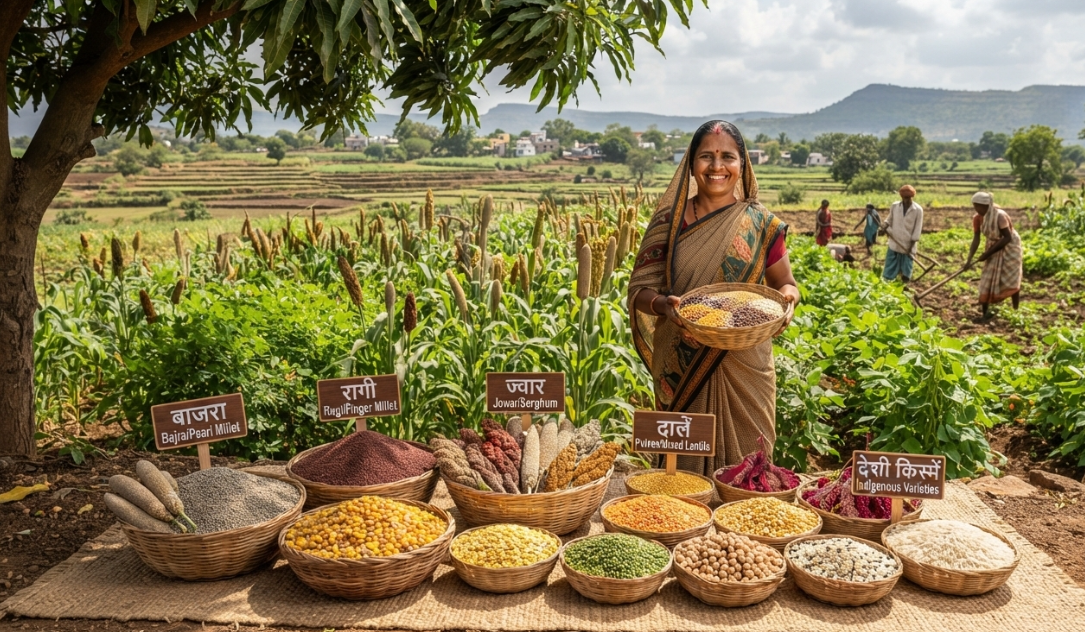
Traditional Indian crops, including millets, pulses, indigenous rice varieties, oilseeds and regional tubers, offer opportunities to strengthen this diversity. Many have been cultivated for generations and remain closely connected to local climates, farming practices and food traditions.
As India faces challenges such as irregular rainfall, pressure on natural resources and changing dietary needs, these crops are gaining renewed attention. With appropriate scientific support, reliable markets and region-specific agricultural policies, traditional crops could contribute to a more resilient food system while creating new opportunities for farmers and rural businesses.
Why Traditional Crops Matter for Food Security in India
Food security means more than having sufficient foodgrain production. It also involves ensuring that people can access affordable, nutritious food throughout the year. Farmers, meanwhile, need crops that are suitable for their land and can provide a dependable income.
India’s agricultural system has made considerable progress in meeting domestic food demand. According to the Ministry of Agriculture and Farmers Welfare, total foodgrain production reached a record 332.30 million tonnes in 2023–24. Production of Shree Anna, the government’s collective term for millets, was estimated at 17.57 million tonnes.
These figures highlight the scale of Indian agriculture and the contribution millets already make to the country’s food supply.
Expanding crop diversity can complement established foodgrain production. Depending on the variety and local conditions, traditional crops can offer additional sources of nutrients, alternatives for rain-fed farming and opportunities to diversify agricultural income.
The objective is not to replace rice and wheat entirely. It is to build a food system with more suitable crop choices for different regions and farming conditions.
Millets Can Support Climate-Resilient Agriculture
Millets such as jowar, bajra and ragi have long been part of Indian agriculture. Other varieties, including foxtail, kodo and little millet, are also grown in different regions and feature in traditional diets.
Several millet varieties are suitable for rain-fed farming and can grow under conditions where water availability is limited. Their performance varies according to soil, rainfall, crop variety and cultivation practices, but they can offer useful alternatives in some areas facing water constraints.
Millets also contribute to dietary diversity. Depending on the variety, they provide fibre, minerals and other nutrients that can form part of a balanced diet.
The Food and Agriculture Organization has recognised millets as an important crop category for India through its One Country One Priority Product initiative, which supports the development of selected agricultural products and their value chains.
However, expanding millet cultivation requires more than encouraging farmers to grow these crops. Access to quality seeds, agricultural guidance, processing facilities and dependable buyers is essential. Food manufacturers and retailers can also support demand by making millet-based products affordable and convenient.
Traditional Pulses Can Improve Dietary Diversity
Pulses such as tur, moong, urad, masoor and gram are important sources of plant-based protein in Indian diets. They provide consumers with affordable food options and can contribute to more varied diets.
Pulses also have agricultural benefits. Many leguminous crops work with soil bacteria to fix atmospheric nitrogen, potentially contributing to soil fertility. The benefits depend on the crop, soil conditions and farming practices, including how crops are incorporated into rotations.
The Ministry of Agriculture and Farmers Welfare estimated India’s pulse production at approximately 24.25 million tonnes in 2023–24.
Improving domestic pulse production could help strengthen food supplies, but farmers need practical incentives to cultivate these crops. Better seed availability, improved storage, reduced post-harvest losses and reliable market access can make pulse farming more attractive.
For consumers, stronger supply chains can help improve availability and affordability. This is particularly important for households that rely on pulses as a regular source of protein.
Preserving Indigenous Rice and Wheat Varieties
India’s agricultural heritage includes numerous traditional rice varieties associated with different regions, cuisines and growing conditions. These varieties may differ in aroma, taste, grain characteristics and suitability for local environments.
Some are valued for their culinary qualities, while others may possess traits that researchers can study for future crop improvement. However, traditional varieties do not automatically deliver higher yields or better climate resilience than modern alternatives. Their performance must be assessed under specific conditions.
Preserving agricultural diversity can help maintain a broader pool of genetic resources. This may prove useful as researchers work to develop crops that can respond to changing temperatures, rainfall patterns, pests and diseases.
Farmers, agricultural universities, research institutions and seed banks can contribute by documenting, conserving and evaluating local varieties. Scientific breeding can then help combine useful traditional traits with the productivity and resilience required by modern agriculture.
The aim is to preserve valuable agricultural resources while ensuring that farmers have access to productive and commercially viable crops.
Traditional Oilseeds and Tubers Can Broaden Food Choices
Groundnut, sesame and mustard are among the oilseeds used in Indian food systems. Regional tubers such as cassava, yam and taro also contribute to diets in several parts of the country.
These crops can help diversify agricultural production and provide additional food and income opportunities. Their suitability depends on local climate, soil, water availability and market demand.
Storage and processing are particularly important for crops that are perishable or difficult to transport. Without suitable infrastructure, farmers may struggle to sell produce before it deteriorates or lose value during periods of oversupply.
Local processing businesses can help address this challenge by creating products suited to regional tastes and consumer needs. Where established farming traditions and demand already exist, these businesses can help connect farmers with more dependable markets.
Creating Better Markets for Traditional Indian Crops
Farmers are more likely to cultivate a crop when they have confidence that it can generate a reasonable return. Even crops with nutritional or agricultural benefits can struggle to expand if demand is inconsistent or prices fluctuate sharply.
Market development is therefore central to the future of traditional crops.
Food companies can introduce millet-based snacks, pulse products, traditional grain mixes and other convenient foods. Farmer-producer organisations can help small farmers aggregate their produce, improve bargaining power and connect with larger buyers.
Government procurement and public nutrition programmes may also create opportunities for suitable traditional crops, provided they meet nutritional, cost, quality and operational requirements.
For these approaches to succeed, farmers need transparent pricing, dependable purchasing arrangements and access to processing infrastructure. Businesses, in turn, require consistent quality and reliable supplies.
Consumer awareness is equally important. Making traditional foods easier to find, prepare and incorporate into everyday meals can help create lasting demand rather than relying on short-term interest.
The Role of Research and Government Support
Traditional crops need continued scientific research to realise their potential. Agricultural institutions can evaluate varieties for yield, nutritional quality, disease resistance and suitability under different environmental conditions.
The Indian Council of Agricultural Research and agricultural universities can also help farmers access improved seeds and practical cultivation guidance. Research is especially valuable when it identifies the varieties best suited to particular regions rather than assuming that one crop will work equally well everywhere.
Community seed banks and farmer networks can support the conservation of indigenous varieties. Agricultural extension services can help farmers understand the costs, benefits and risks of diversifying their crops.
Government policies should reflect regional differences. Farmers in dryland areas may face different challenges from those working in irrigated regions. Access to machinery, local processing, storage, transport and established markets also affects which crops are commercially viable.
Combining farmers’ experience with scientific research and market support can help make crop diversification more practical and sustainable.
Challenges in Expanding Traditional Crop Production
Despite their potential, traditional crops face several barriers. Some have limited processing infrastructure, while others compete with established crops that benefit from familiar procurement arrangements and dependable buyers.
Changing food habits can also affect demand. Consumers may be unfamiliar with certain grains or may find them less convenient to prepare than commonly consumed foods. Some traditional varieties may also be less productive under particular conditions or require specialised cultivation and handling.
Addressing these challenges requires coordinated action. Food businesses can improve product availability, retailers can make traditional grains easier to access, and agricultural programmes can support suitable varieties and farming methods.
Farmers should receive clear information before changing their crop choices. Diversification is not automatically profitable, and each alternative needs to be assessed against local conditions, production costs, water availability and likely market returns.
The Future of Traditional Indian Crops
Traditional crops can help India connect its agricultural heritage with present-day food-security priorities. Millets can diversify cereal production, pulses can contribute to affordable protein, indigenous varieties can preserve valuable genetic resources, and regional oilseeds and tubers can broaden food choices.
Realising this potential will require better seeds, region-specific research, improved storage and processing, stronger market connections and sustained consumer demand.
Traditional crops are not a substitute for improving the productivity of India’s existing agricultural system. Their value lies in complementing it, expanding the choices available to farmers and consumers, and reducing dependence on a narrow range of crops where suitable alternatives exist.
Conclusion
India’s food security will depend on a food system that is productive, diverse and capable of adapting to changing conditions. Traditional crops can contribute by supporting varied diets, creating agricultural market opportunities and helping farmers diversify their production.
With scientific support, suitable government policies and stronger connections between farmers and food businesses, these crops can become a more meaningful part of India’s agricultural future. Preserving traditional crop diversity while improving productivity can help build a food system that better serves farmers, consumers and future generations.