Private charter broking is coming under pressure from two directions. Customers are becoming more price-conscious, while digital tools are making aircraft availability and pricing easier to compare. In highly competitive markets, this is increasing the pressure on brokers to respond faster and reduce margins.
At Corporate Jet Investor Dubai 2026, a panel of charter industry leaders discussed what this means for service quality, accountability and the future role of the broker. Steffen Fries, Special Advisor to the Group CEO at Chapman Freeborn, said the challenge is particularly visible in the Middle East, where price can become the deciding factor before the operational details of a charter have been fully considered.
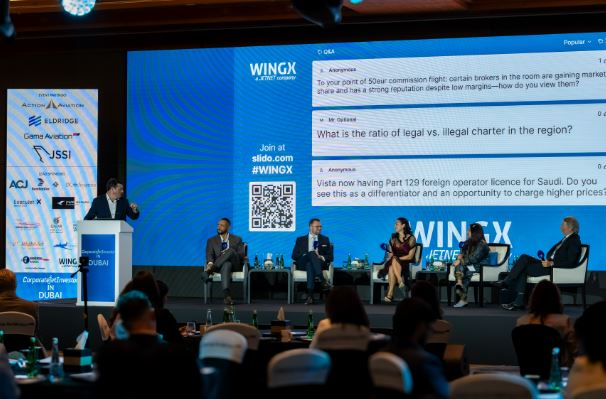
“In many markets, someone can begin selling a USD 100,000 flight without first demonstrating that they understand the operational and regulatory requirements behind it,” said Fries. “That does not mean every small or new broker lacks expertise. There are excellent brokers of all sizes. The problem arises when limited experience is combined with promises that an operator cannot fulfil.”
The pressure to compete on price
According to Fries, buyers in the Middle East may negotiate over the final USD 500 or USD 1,000 of a charter price without always understanding what separates one proposal from another.
An available aircraft and an attractive quote do not necessarily make an itinerary workable. Permit lead times, airport opening hours, customs availability, crew duty limits, runway conditions and fuel requirements can all affect whether the flight can operate as proposed.
“If a broker makes an unrealistic promise, both the broker and the operator lose credibility when it cannot be delivered,” Fries explained. “An experienced broker manages the expectations of the customer and the operator before the flight takes place.”
Price pressure can also increase exposure to grey-market charters, where private aircraft are offered for paid passenger flights without the necessary commercial operating authority. The aircraft may look no different from a compliant charter aircraft, making the distinction difficult for passengers to recognise.
The UK Civil Aviation Authority advises paying passengers to confirm who will operate their flight and whether the operator holds the correct certificates, insurance and licences. The US Federal Aviation Administration similarly recommends asking to see the operator’s Air Carrier or Operating Certificate.
“The passenger cannot identify a grey-market aircraft simply by looking at it,” said Fries. “This is where a credible broker has an important responsibility. We must verify the operator and aircraft rather than offering an unsuitable option simply because it is cheaper.”
Fries said grey-market activity is a particular concern in the Middle East because of the region’s large population of privately owned aircraft. While owners may use their aircraft privately, accepting payment for passenger transport can turn a journey into a commercial operation subject to different requirements.
An unauthorised commercial flight may be delayed or grounded if irregularities are identified during an inspection. For customers using private aviation to save time and reduce uncertainty, the cheapest proposal can therefore become the most disruptive.
An industry-led standard
Fries believes greater accountability should not necessarily mean another layer of government regulation. Instead, established brokers, operators and industry bodies could work together to define common professional standards.
These could set minimum expectations around operational knowledge, operator due diligence, insurance, contractual transparency and customer care, helping buyers distinguish between brokers offering professional oversight and those competing primarily on price.
“This is not about protecting larger brokers from competition,” said Fries. “Competition challenges established companies to improve, and that is healthy. What damages the market is making promises without the knowledge or resources required to deliver them. When a customer has a poor experience, trust in the wider industry is affected.”
AI will expose brokers that add little value
Artificial intelligence is likely to bring greater transparency to charter pricing and aircraft availability. As customers gain faster access to market information, brokers whose role is limited to finding an aircraft and forwarding a quote may find it increasingly difficult to justify their place in the transaction.
“If the broker’s only role is to find an aircraft and a price, technology may eventually make that role obsolete,” said Fries. “But complex charter operations involve much more than that. Someone still needs to bring together permits, airport requirements, customs, crew considerations, ground transport and contingency planning.”
AI could also help brokers anticipate operational problems earlier by identifying periods when fuel services, customs availability or airport capacity are likely to be constrained. Fries expects better use of data to make planning faster and more predictable, while allowing experienced brokers to focus on judgement, risk management and customer support.
“The role of the broker will change, but it will not disappear,” he concluded. “As information becomes easier to access, judgement and accountability become more important. Customers are not only paying for an aircraft. They are paying for someone to anticipate what could go wrong and make sure the journey works as promised.”